

Explore the Gothic Quarter and Modernista Landmarks
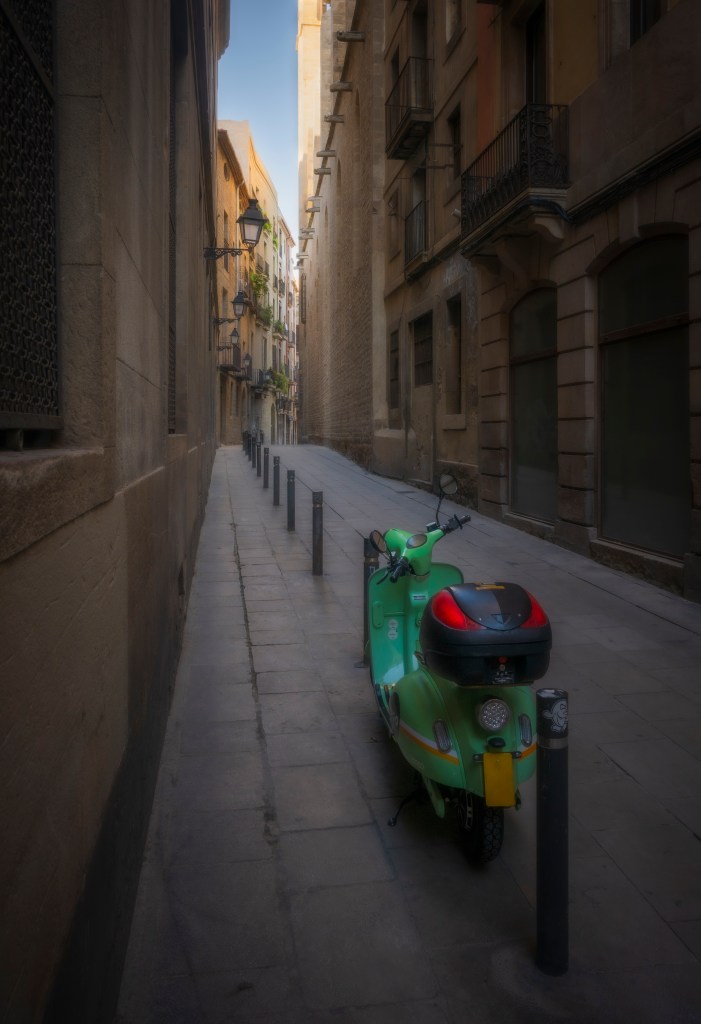
Normally this site is dedicated to landscape or wildlife photography, but I was fortunate enough to be able to spend a week in Barcelona in early June this year, so I thought I would share some thoughts about the experience. So start your scooter, let’s get rolling.
Prints of images in this blog are available from my on-line gallery through Pictorem here. Pictorem is a professional printing service who offer a variety of print media including Canvas, Acrylic, Wood and Metal substrates. Most importantly they offer a money back guarantee if you are not completely satisfied. If you see an image on this post which you would like to purchase and it is not available on Pictorem, just contact me here.
Where to Stay
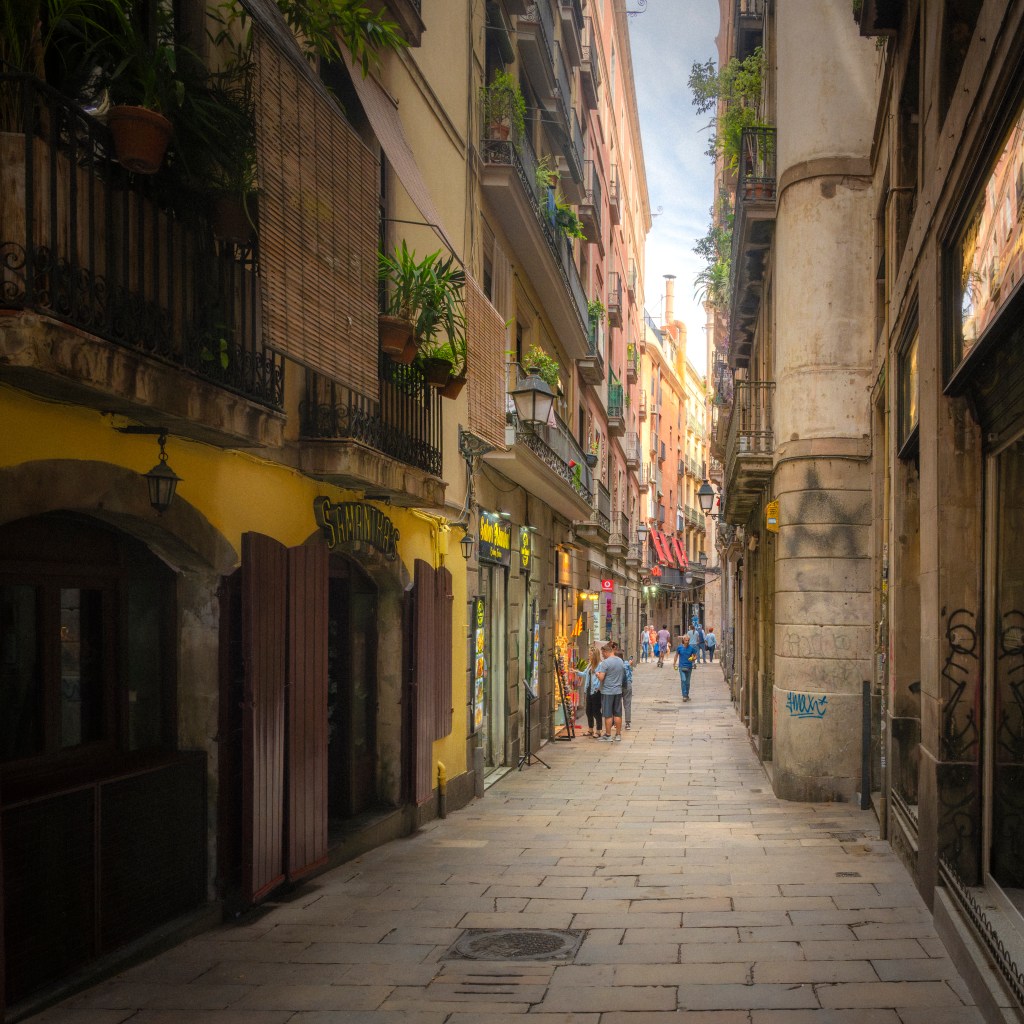
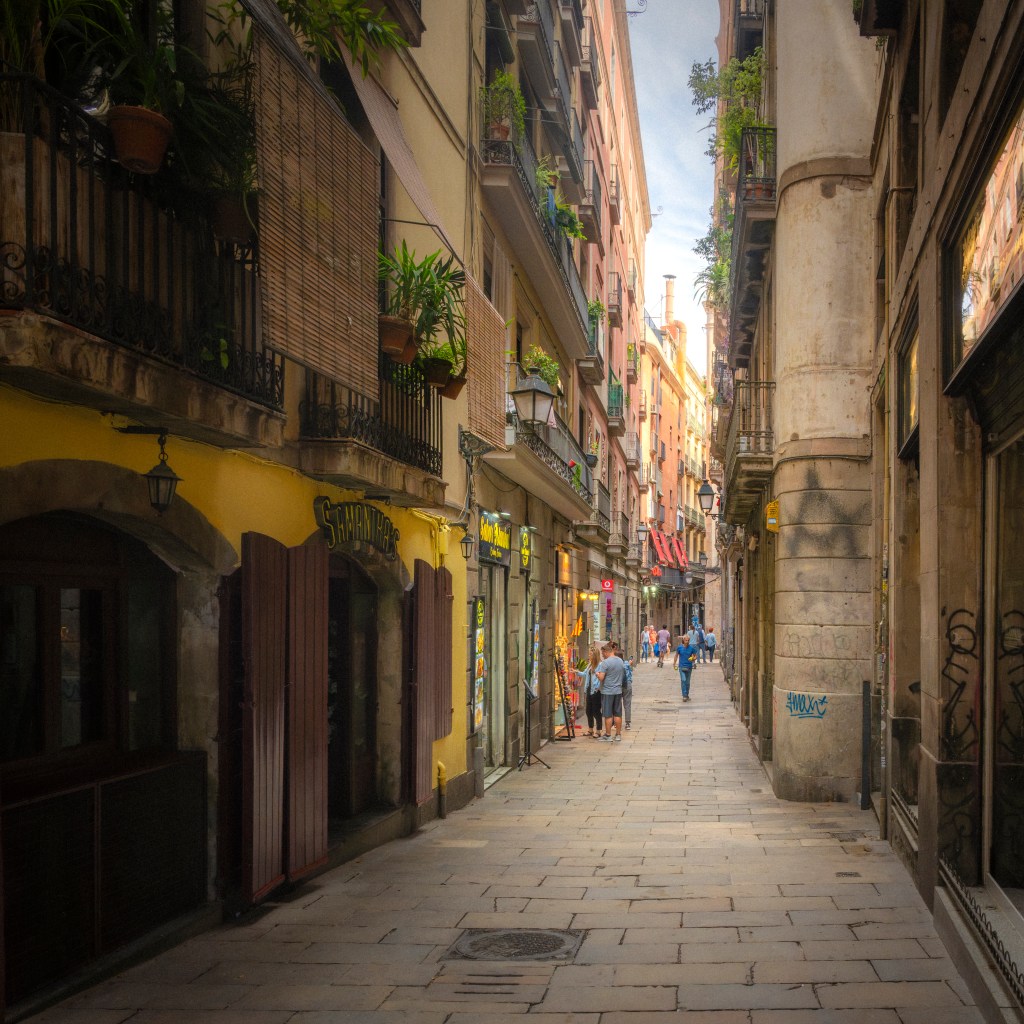
We stayed in the Gothic Quarter which was centrally located to all of the major sites, and was within easy walking distance to Placa del Catalunya (the central square where everything about the city congregates). Apparently, and we only learned this after a week of being in Barcelona, the Gothic Quarter was conceived and built starting in 1907 (well at least according to our tour guide). The city government at the time came up with this idea in order to create a tourist industry. The Gothic quarter is a maze of narrow streets, lined with apartments, restaurants and dotted with frequent squares which made for nice gathering points and centers of activity.
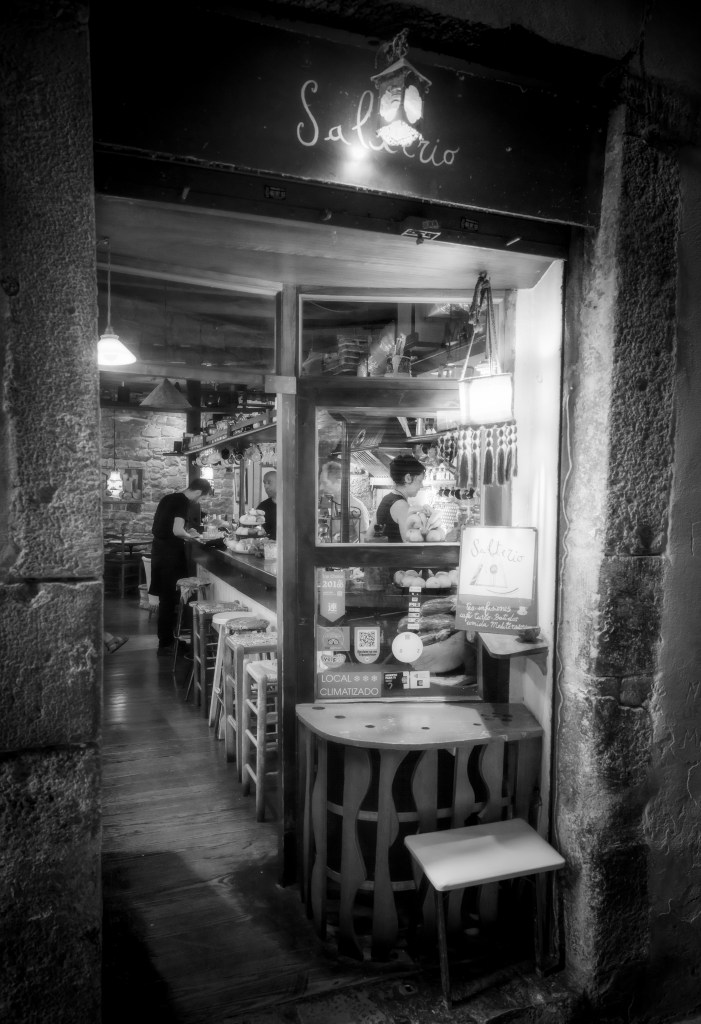
Well let me tell you that the original idea of creating the gothic quarter, and subsequent efforts like hosting the 1992 Olympics, revamping the industrial waterfront and creating a beach scene (by importing sand) have worked. Together with Barcelona’s free-spirited and friendly disposition, it is now a very busy tourist destination.
Temperatures in early June were ideal, a very comfortable 22-24 degrees during the peak of the day, and dropping to about 19 during the evening. For a more modern feel to the city, there are many hotels in the Eixample district, just north of Placa de Catalunya. This more recent part of the city features wide boulevards, modern apartments, lots or Modernistic architecture and of course many nice restaurants and bars to frequent.
Sights to See

Touring Barcelona is all about architecture, especially at the turn of the 20th century, featuring works of Gaudi and many others. The must do’s are the Sagrada Familia, Casa Batlo, and Casa Mila. The lesser known sights to see are the old Cathedral, the Pont del Bisbe (between the palace the Bishops residence), Parc Guell, and Hopital Sant Pau (highly recommended).
Pictured here is the famous El Pont del Bisbe, a bridge between the Royal Palace and the Bishops residence, constructed so that the Royals could avoid mixing with the commoners as they travelled between the two buildings.
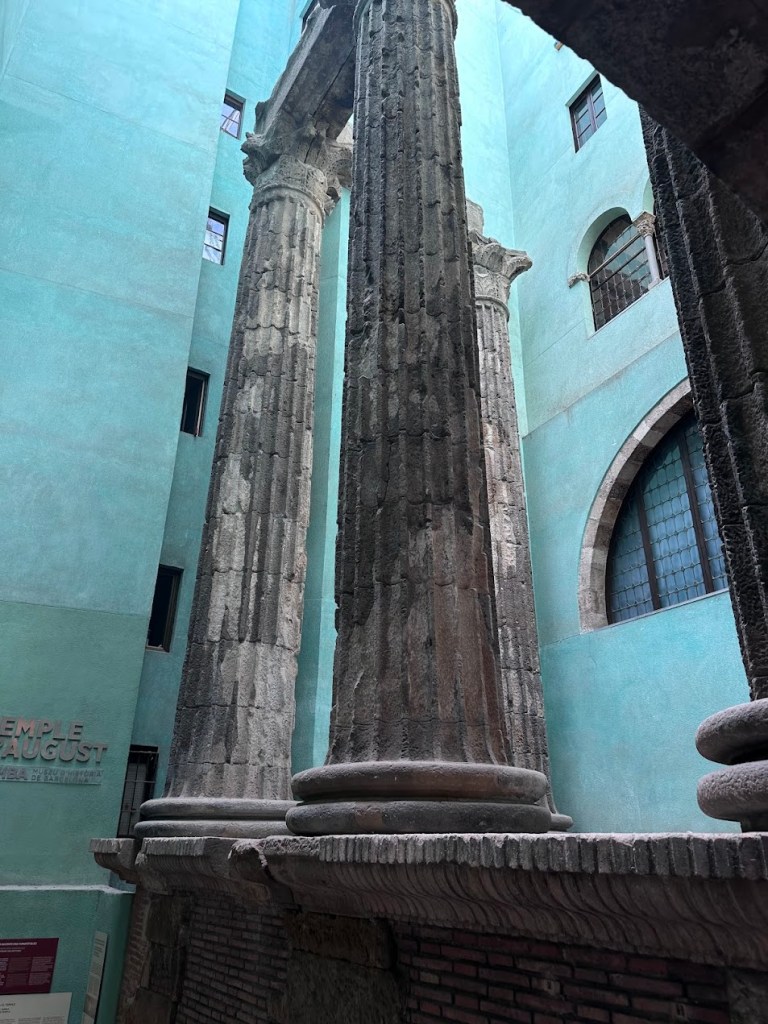
The Gothic Quarter has many very popular tourist sights, and right around the corner from the Pont del Bisbe, are four original columns erected by the Romans as they established Barcelona as a settlement on the Iberian peninsula (early 1st Millenia). These columns are still being used today as part of an apartment complex (talk about bragging rights, right?)
Where not to eat!
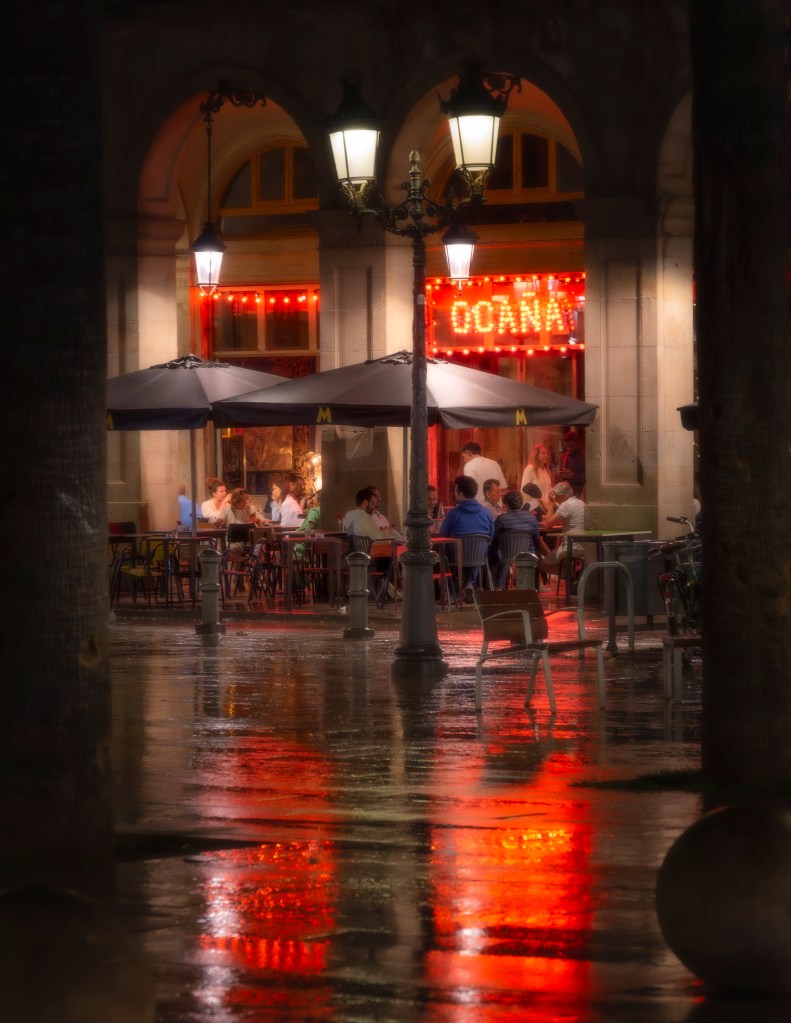
If you are looking for a reasonable dining experience, avoid Las Ramblas or anything close to it. On our first day on arriving we had a late lunch at Placa Reial, a very attractive square with tons of people and restaurants, and is literally 50 meters from Las Ramblas. The meal was okay (the Sangria was great!), but we eventually learned there is much better food available. For better food we headed West and South (towards El Born). Menus were still available in English, wait staff were authentic and the food was far, far better (strangely the Sangria did not improve but was still very much appreciated!).
And where To Eat
I think our favorite restaurant was Le Bistro Sensi (El Born), super packed with diners, so reservations are a must. We also enjoyed ‘A Restaurant’, on Placa Sant Felip Neri. Another good recommendation, this time in Eixample, is El Nacional. This is a converted garage featuring a great Tapas Bar, and several restaurants catering to a variety of tastes. We elected to do lunch here, since it was far less busy and much quieter.
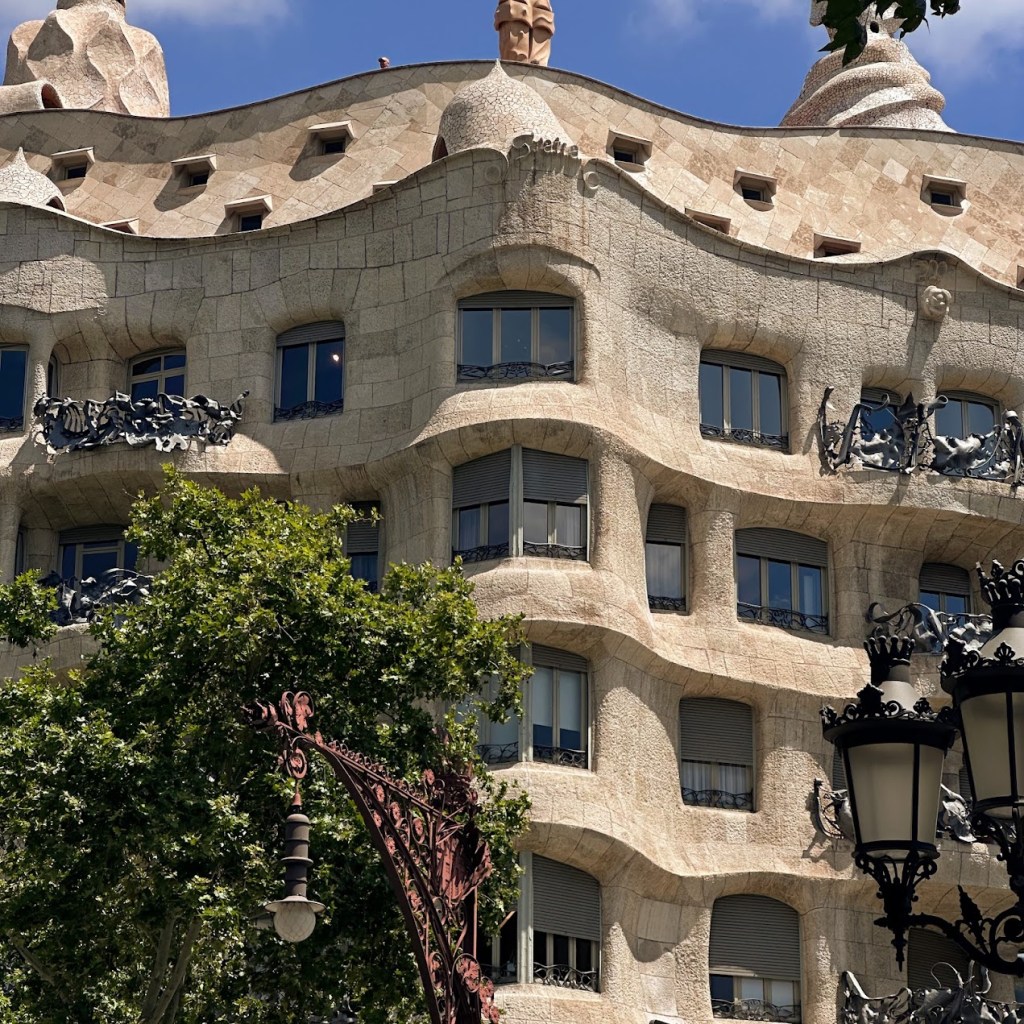
Casa Mila
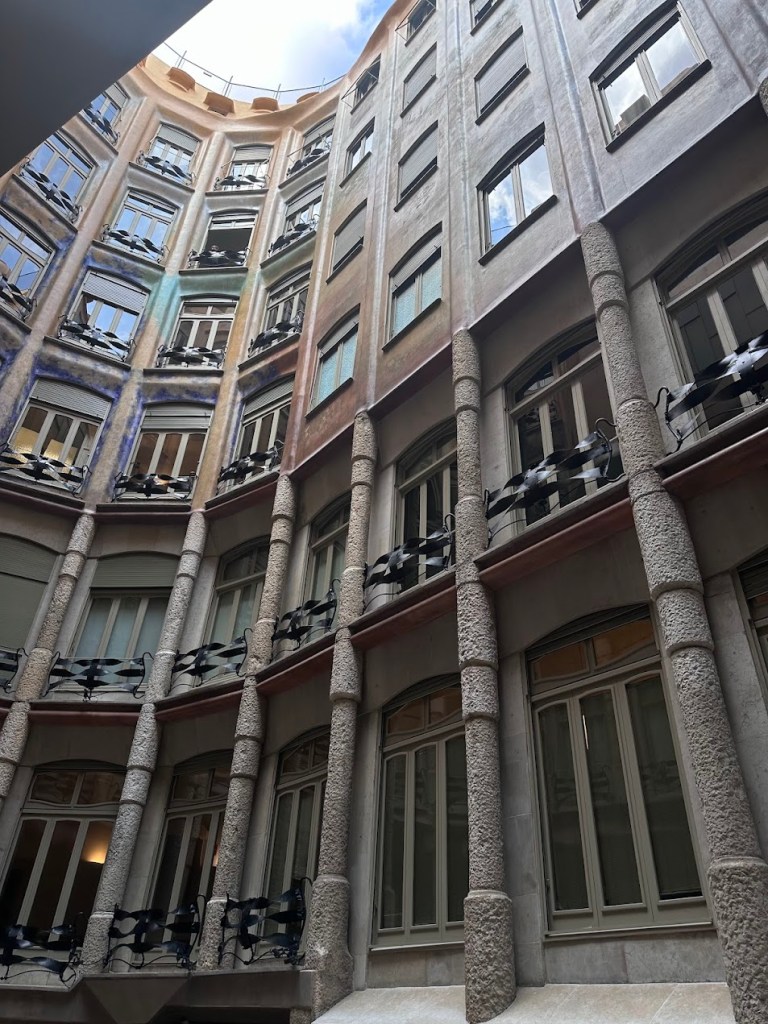
Casa Mila – also known as La Pedrera is a Modernista apartment building in Barcelona, which was built between 1906 and 1912. Fundamentally it is an apartment building, but the owners Pere Mila and his wife Poser Segimen commissioned Gaudi in 1906 as the architect; and architect he did. Creating an undulating stone facade, twisting wrought iron balconies, an underground garage and a spectacular undulating terrace on the roof.
The Casa Mila tour itself is very good and highly recommended. You need to book your tickets in advance (by a couple of weeks at least) to get the date and time of your choosing. The tour starts at the apartment level where you are routed through several rooms typical of the time period (early 1900’s – and remember this is upper middle class for the time). Period pieces, plumbing and heating, (things we take for granted now were luxuries back then) are featured elements until you are invited to climb several stair cases to enter the attic. It is here that you learn more about Gaudi’s innovative architectural style and how he melds man-made modernista with elements of the natural world.
The audio tour is very well done, informative without being preachy, and brief enough to keep the interest of the busy (and conflicted) tourist.
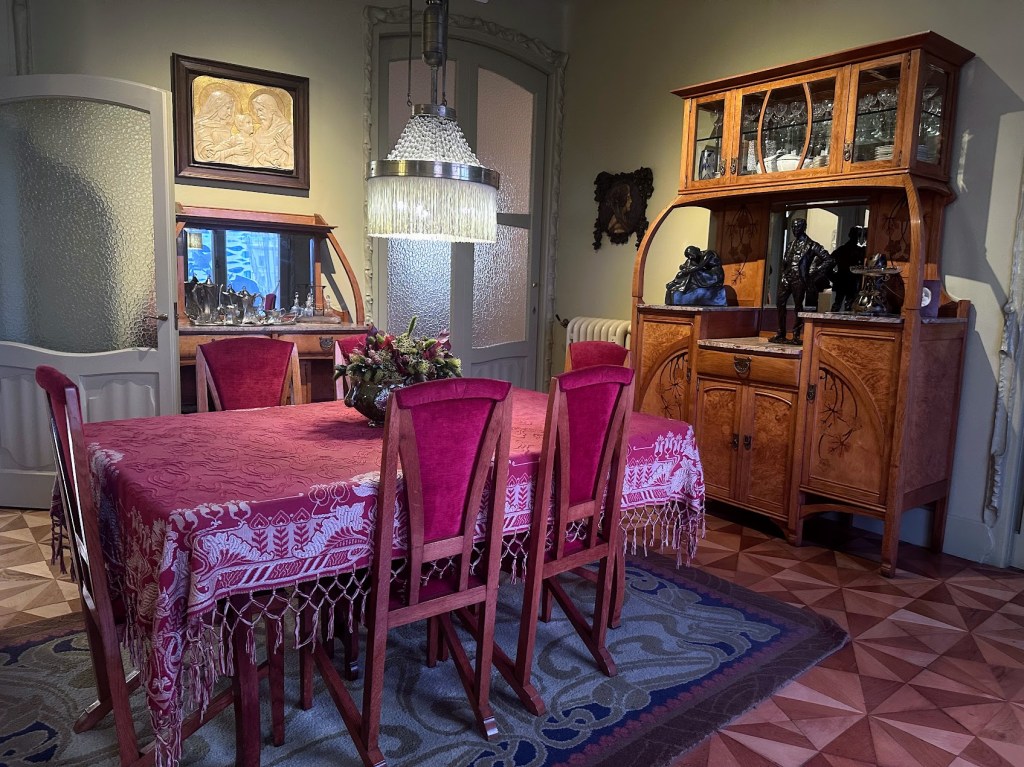
Pictured on the right is a replication of the dining room, what I noticed is that this cannot accommodate a lot of people (maximum 10 place settings), and so large parties were hosted in external venues. After the apartment you are invited to climb several stair cases (there is an elevator) to the attic.
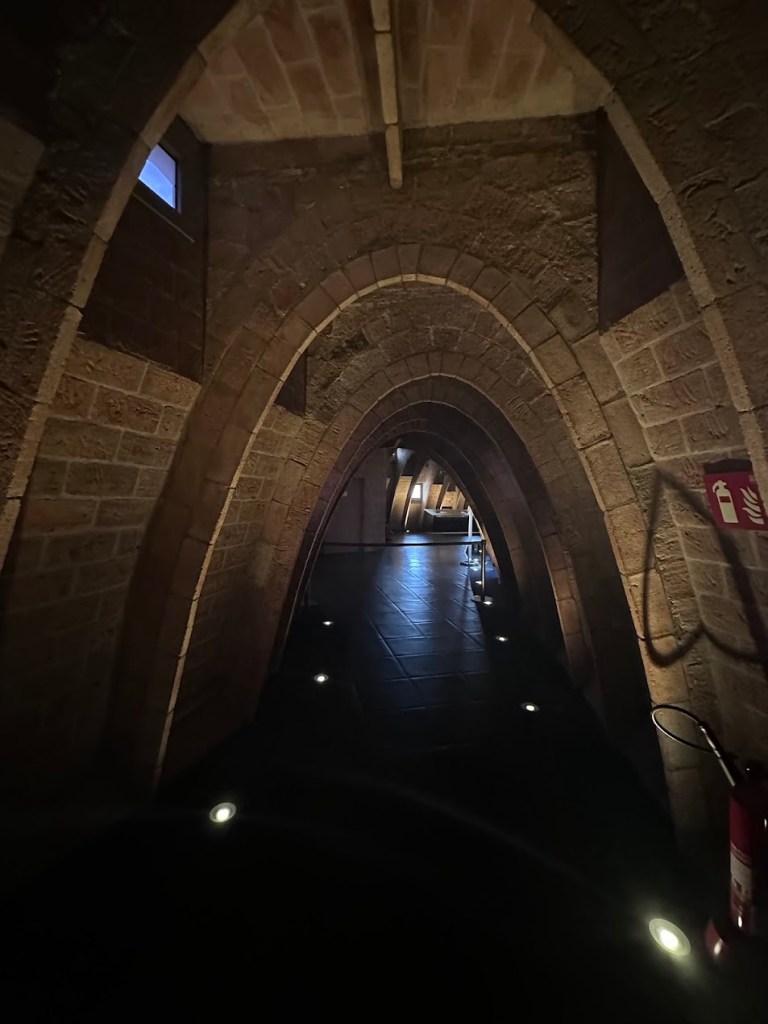
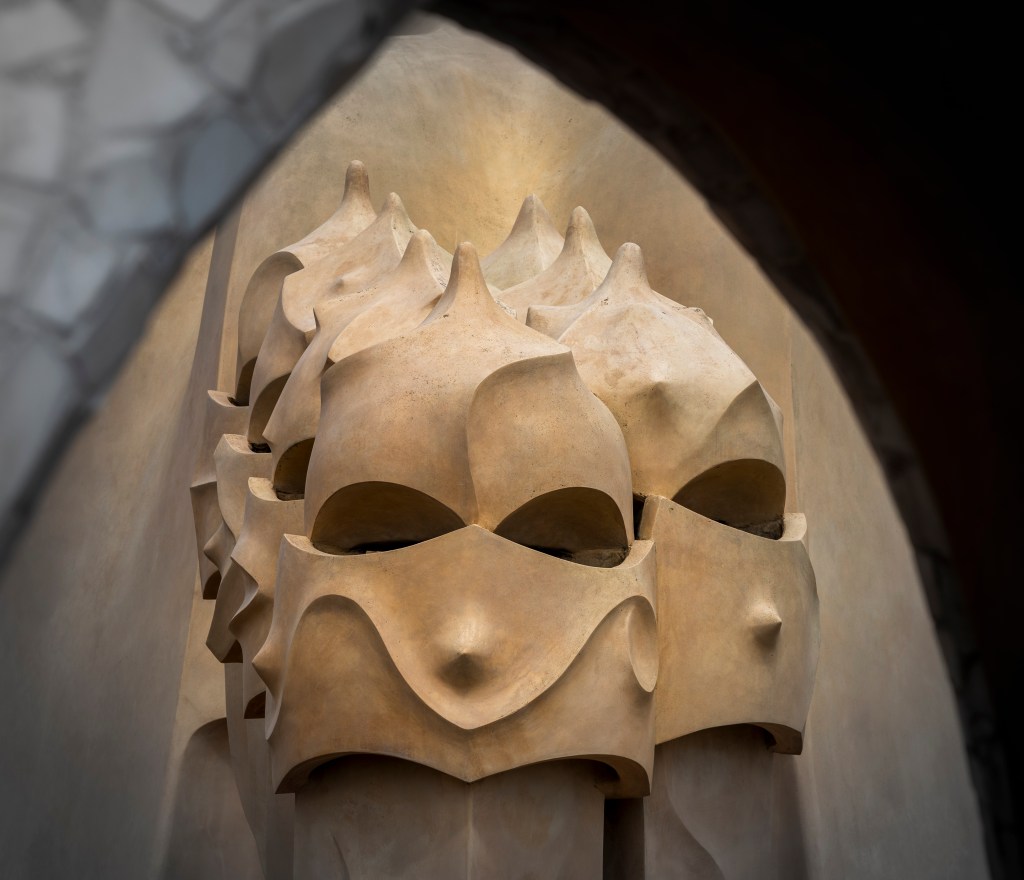
Not only did Gaudi design the attic for functionality (it does after all have to support the roof, the different vents, drains and other functional elements of a roof, and all of course the ‘sculptures’ that you will see later in this post). The interior of the attic features 270 parabolic vaults (all custom designed) which support the roof, but also are meant to represent the rib cage of a huge snake like animal.
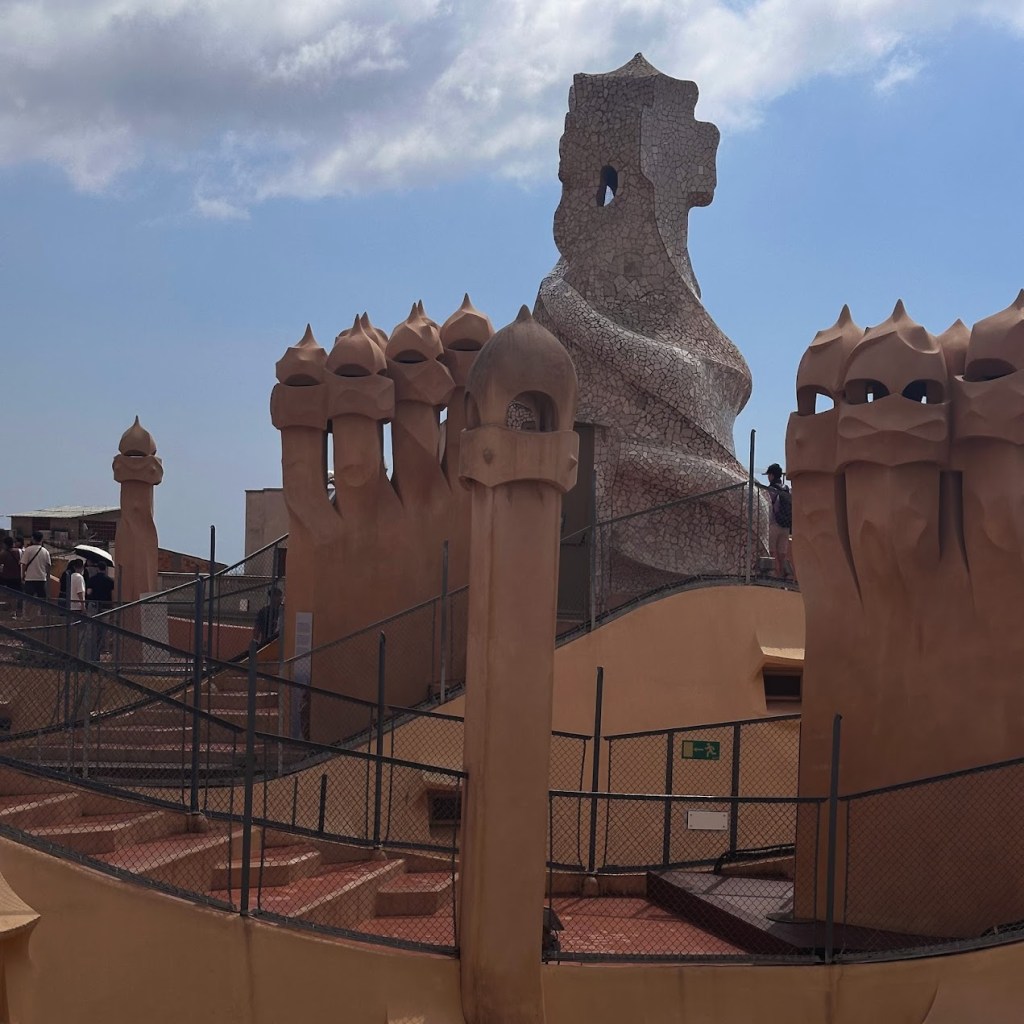
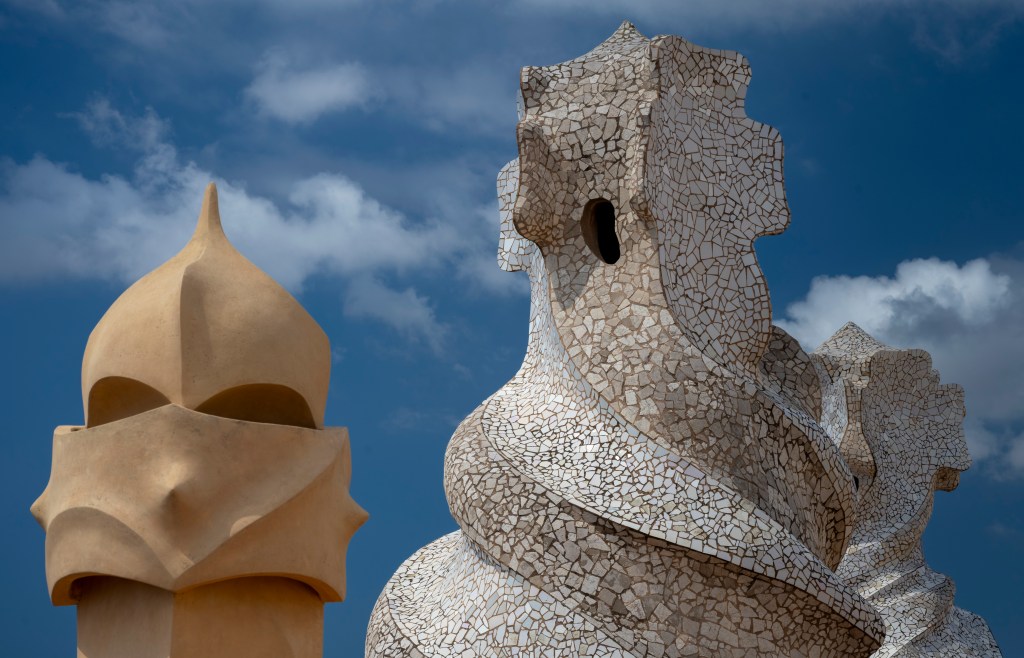
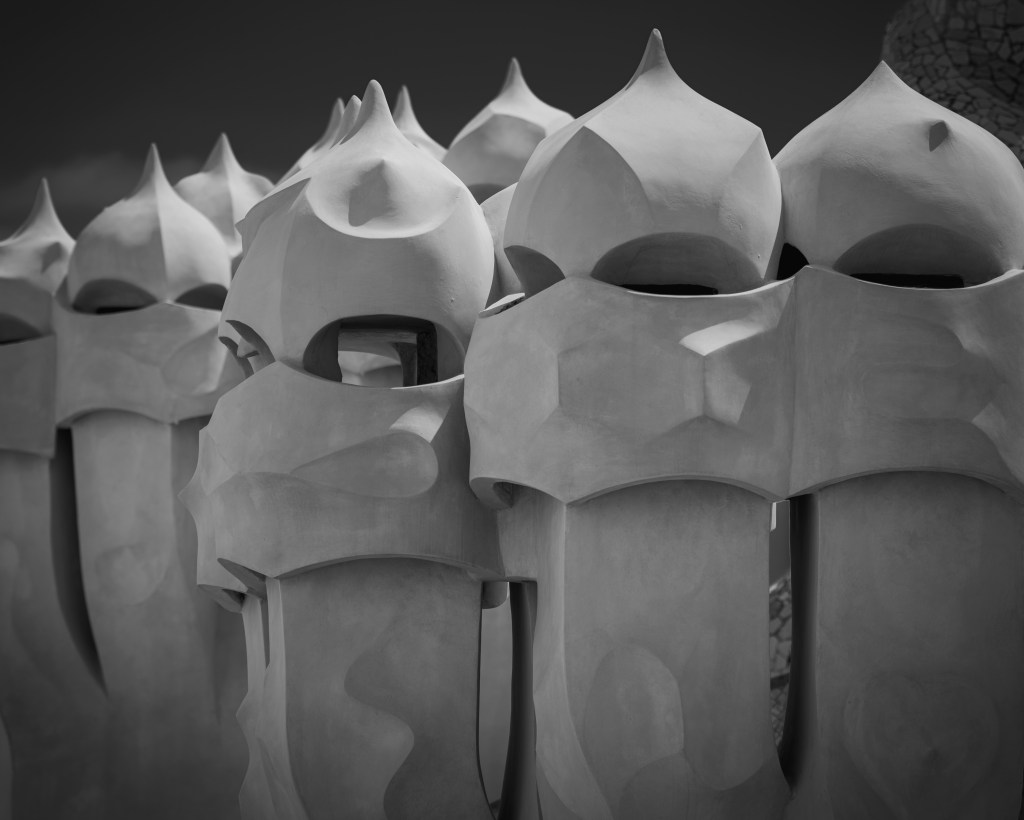
Once you reach the roof, you are faced with an undulating surface that navigates around the two courtyards of the interior. Called the “Garden of the Warriors” by poet Pere Gimferrer, the chimneys, vents and skylights entertain the visitor to no end. There are great views of Barcelona and another Gaudi achievement, the Sagrada Familia.
Get your tickets for Casa Mila here.
The Sagrada Familia
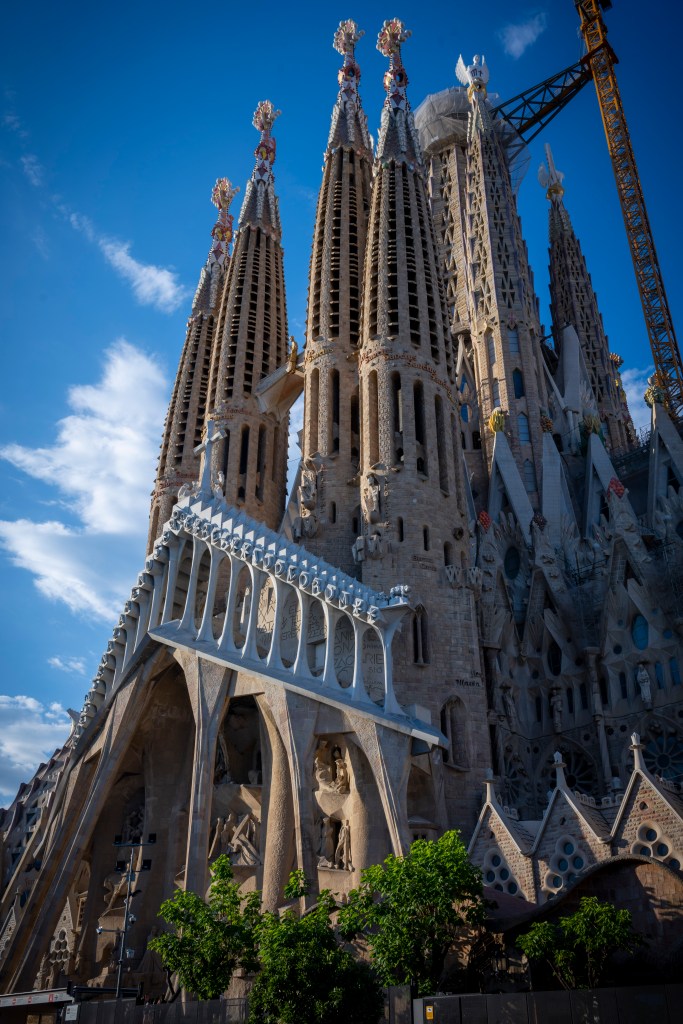
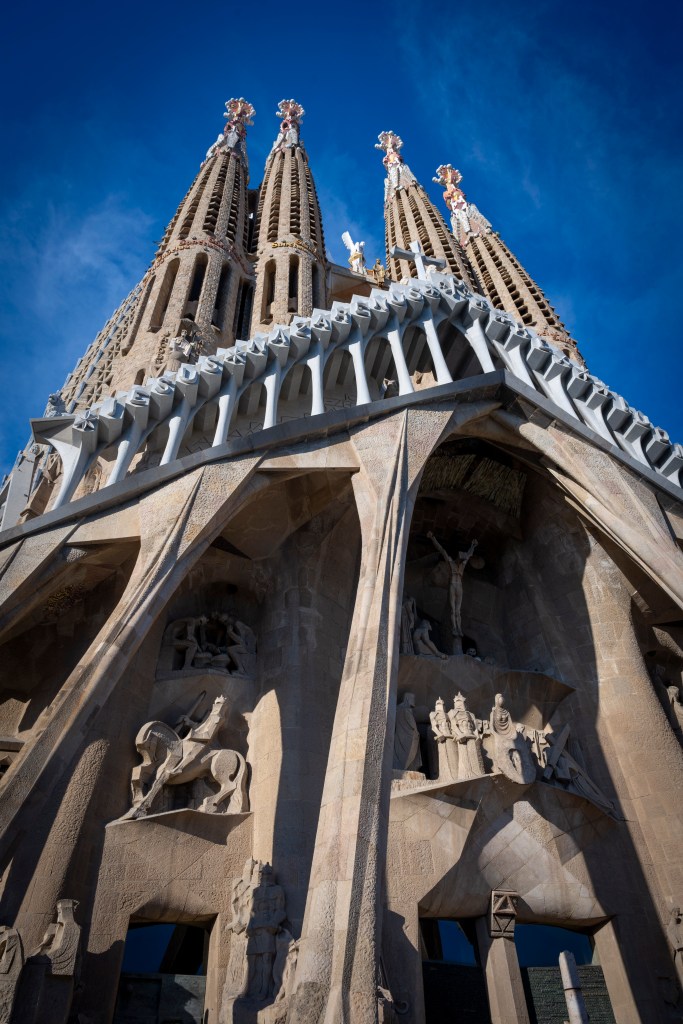
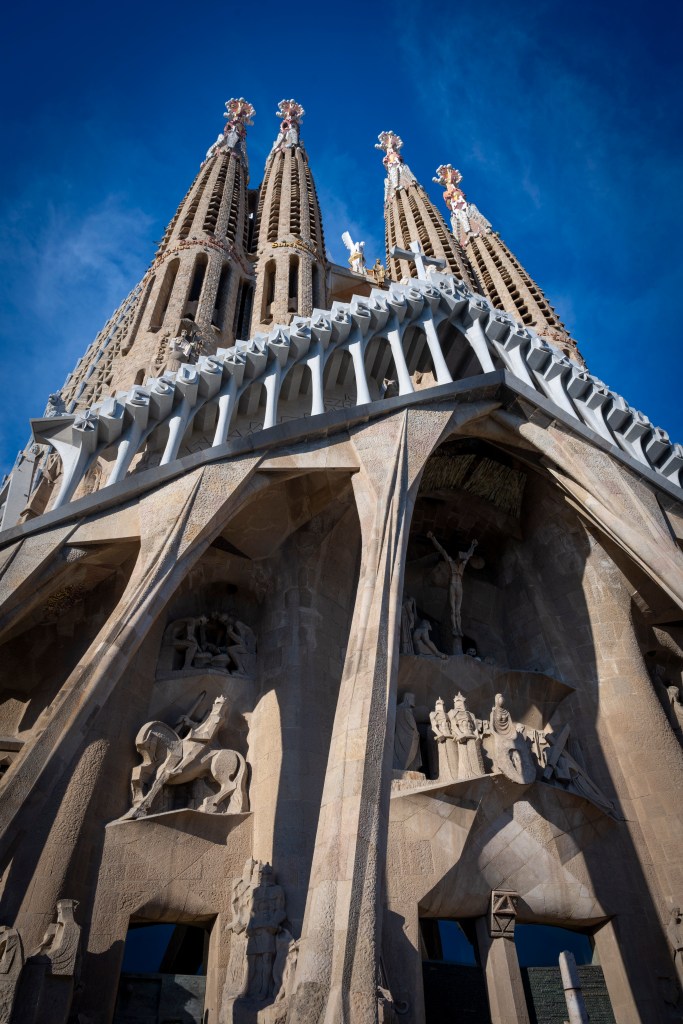
The number one tourist attraction in Barcelona, with over 4 million visitors a year, is the Sagrada Familia. This unfinished architectural marvel is visible from most parts of the city, and was designed to be 1 meter shorter than Mont Juic on the outskirts of Barcelona. Funds for the construction of the Sagrada in fact comes from all those tourists buying entrance tickets, which is why construction slowed down tremendously during Covid lockdowns. Completion is now predicted for some time in 2030. A great reason to revisit the city!
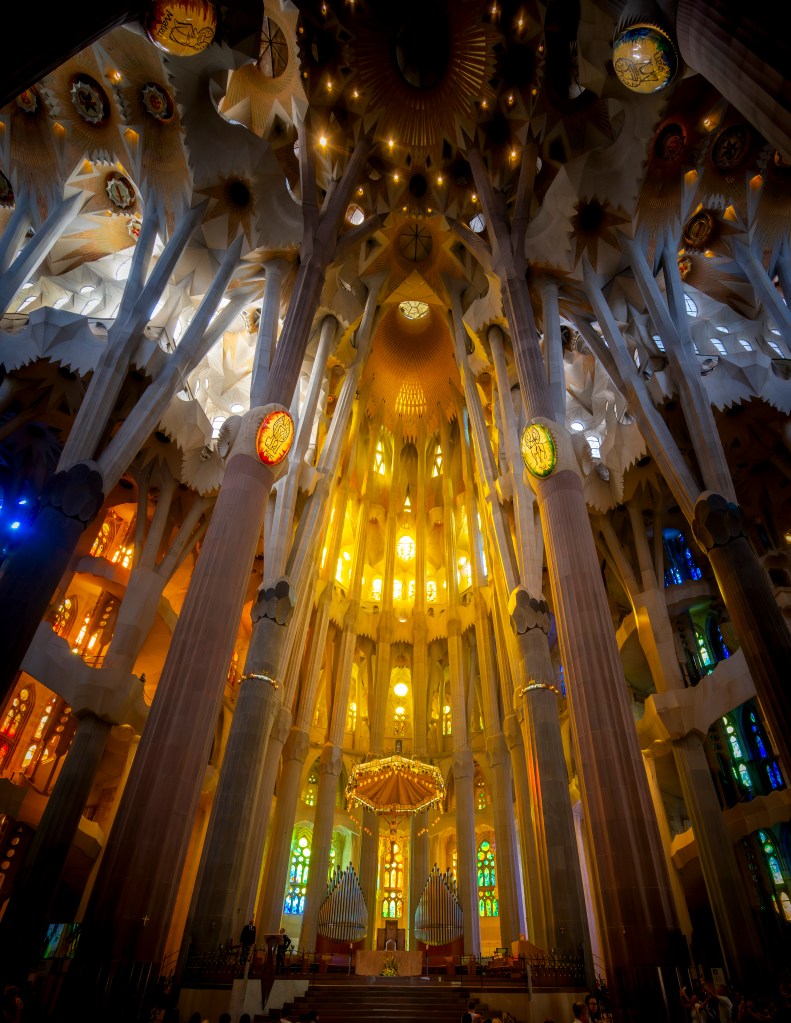
I have been to a number of cathedrals in Europe (the Duomo in Milano, St. Peters in Rome, Notre Dame in Paris), but the Sagrada stands out as unique. As impressive as those other cathedrals are, I never really understood or appreciated the interior art work even after taking the guides (there were too many references to artists I don’t know.) Those other cathedrals can also be somewhat gruesome, dark and cold. While the Sagrada can be equally confusing, the guided tours make sense of the layout and the interior is bright and lively, which was the intent of the architect.
A quick guide to understanding the Sagrada; The exterior will eventually feature three facades, two which are completed (the Nativity scene facing East (sunrise), and the Passion scene facing West, (sunset). The facade facing South (which will be the entrance) is still under construction (but they need to move some apartment buildings out of the way first) and will represent the life of Christ. The towers represent the apostles, the Mother Mary (which will be the second highest tower), and of course Jesus himself (which will be the tallest tower in the group).
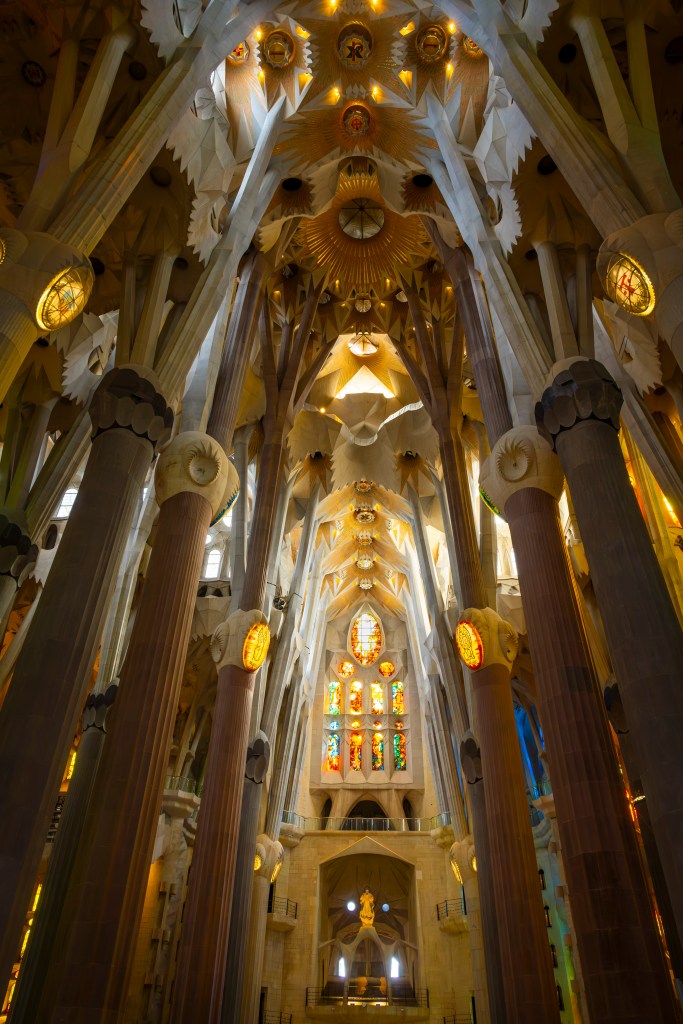
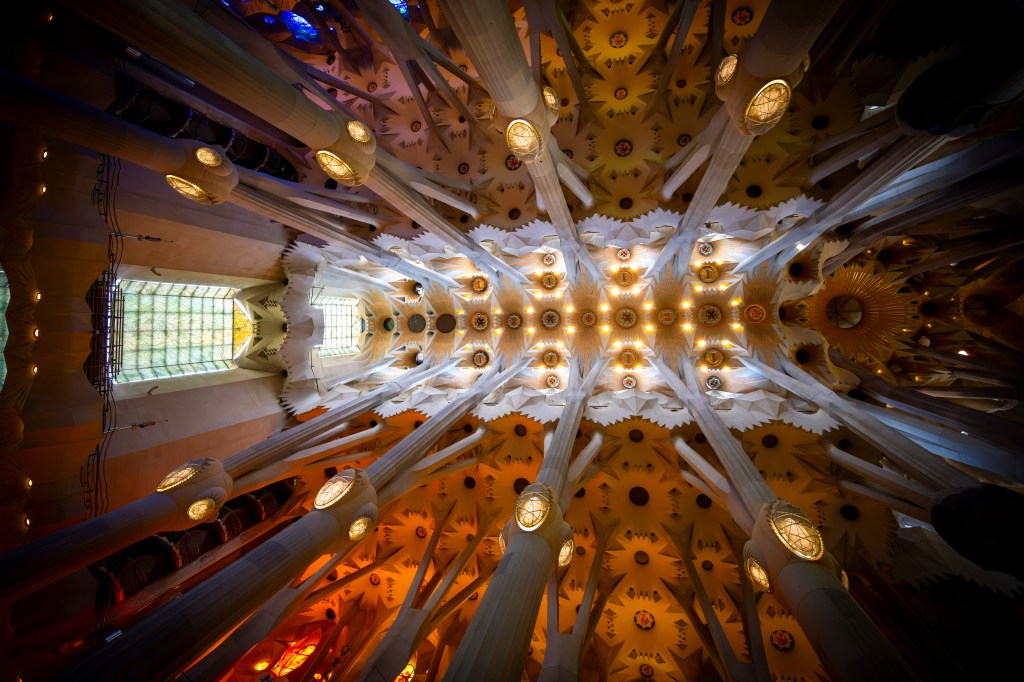
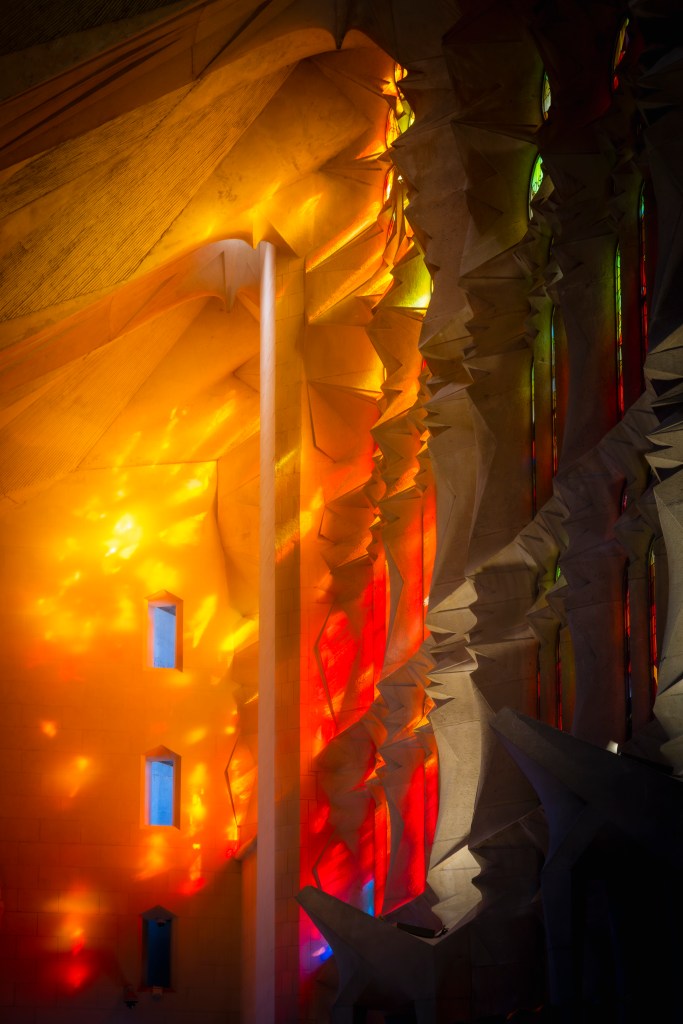
I found the interior far more impressive than the exterior. Gaudi wanted to infuse nature into his creation. The supporting columns represent trees, with branches reaching into the sky (and also supporting all of those towers). The stained glass windows highlight the rising and setting suns as they illuminate the interior (which is actually quite bright compared to all of those other cathedrals I mentioned). Unlike those other cathedrals Gaudi built in copious natural lighting into his creation and so the interior is lively.
Gaudi focused on natural light, and once the towers and roof are completed, natural light will stream from the ceiling through skylights and other features (until the roof is completed, artificial lights are being used to illuminate the interior. Get your tickets for the Sagrada here.
Compared to other Cathedrals
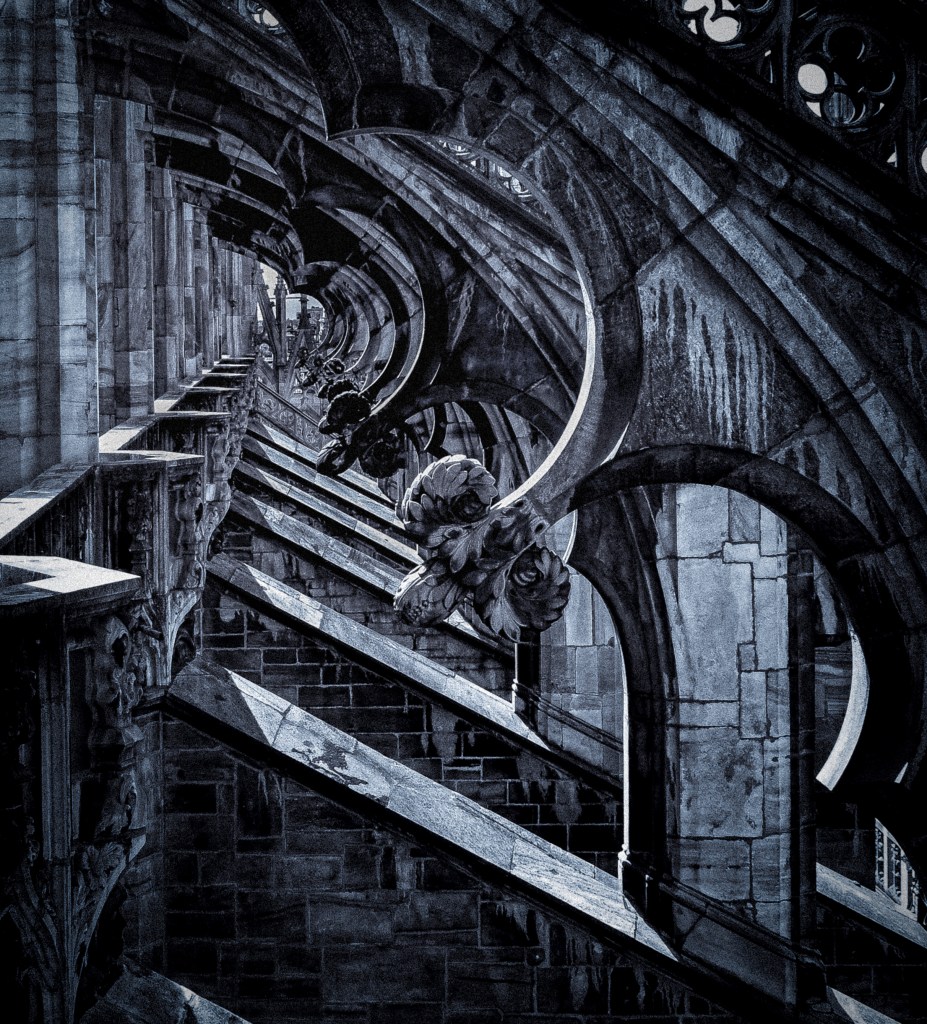
Another architectural innovation created by Gaudi is in the construction of the supporting columns, which are actually angled inwards in order to support the weight of all of the roof and the towers. By being angled inwards eliminates the need for support buttresses common in medieval cathedrals, a fine example of which is shown on the left in the Milano Duomo.
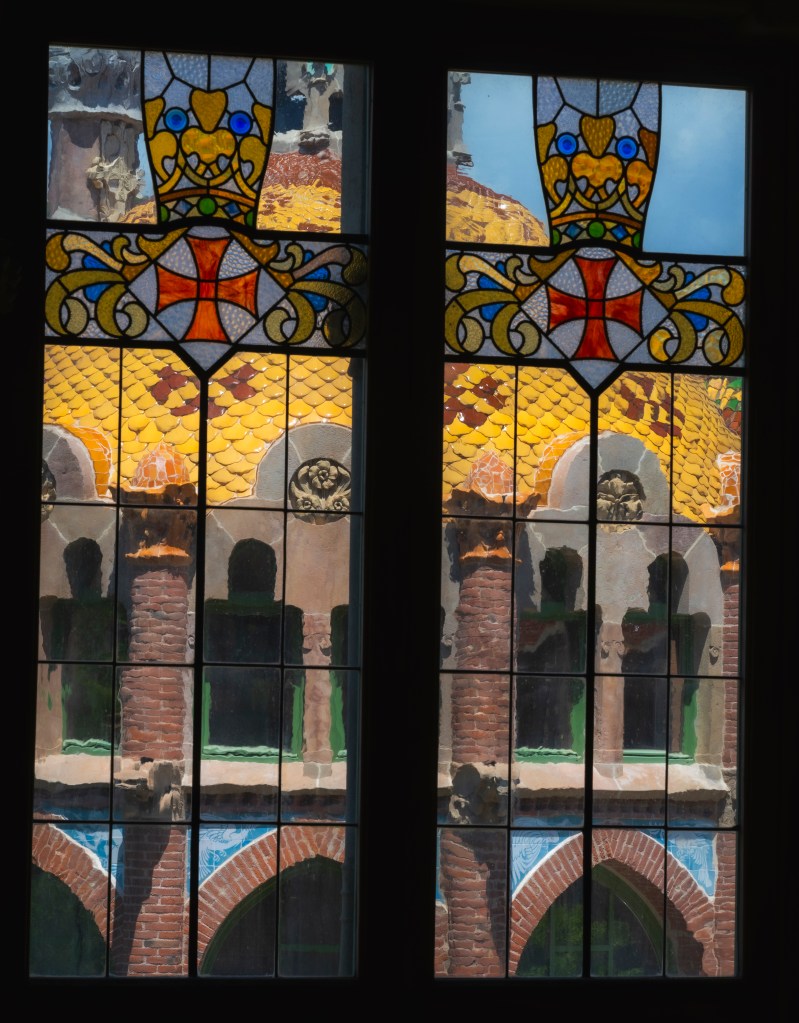
Hospital Sant Pau
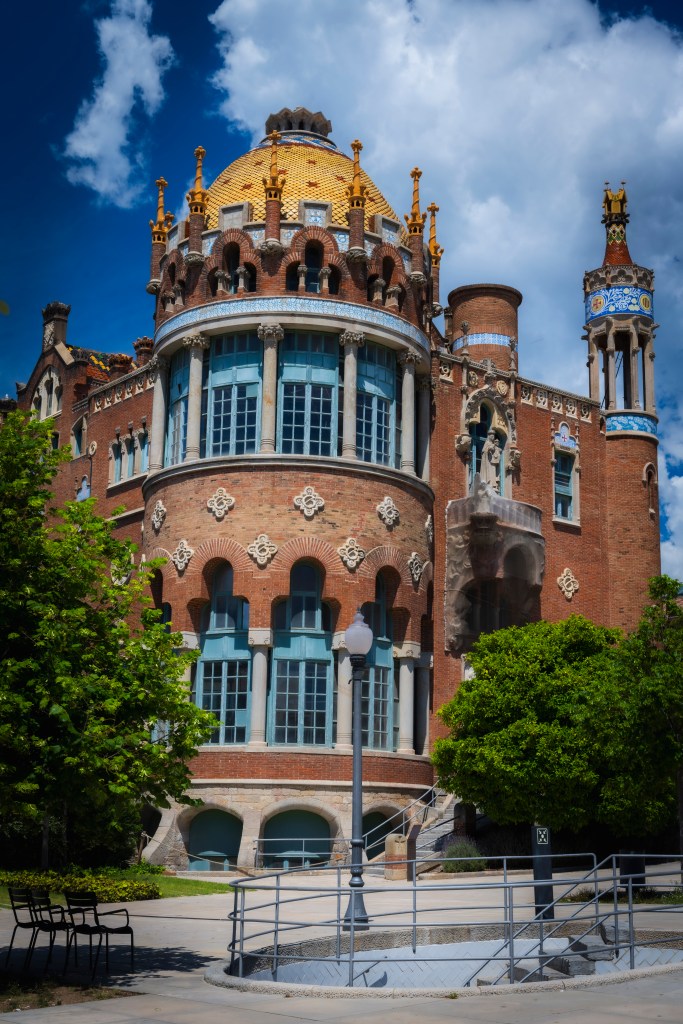
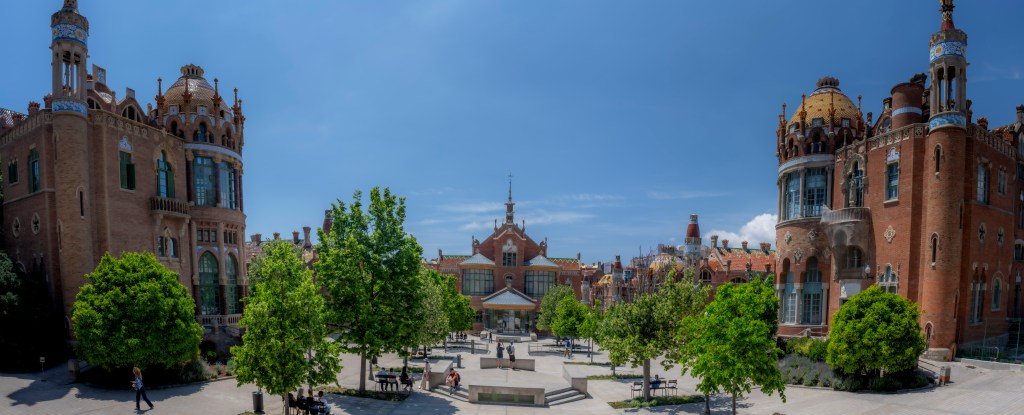
Often overlooked as a tourist destination, Hospital Sant Pau is a very nice example of Modernista architecture and was built between 1901 and 1930. It is one of the most prominent works of the Catalan modernism architect Lluis Domenech i Montaner. Composed of 12 pavilions connected through long underground galleries within its large green space, Sant Pau is the largest complex built in Art Nouveau style. It was a fully functioning hospital until June 2009, when the new hospital opened next to it. It underwent restoration for use as a museum and cultural center, and re-opened in 2014. Well worth a visit.
The Barcelona Cathedral
The Cathedral of the Holy Cross and Saint Eulalia, also known as the Barcelona Cathedral is the seat of the Archibishop of Barcelona in Catalonia, Spain. The Cathedral is centrally located in the Gothic Quarter, and the surrounding areas are well worth exploring, with tiny streets, numerous art galleries and of course, many Tapas Bars.
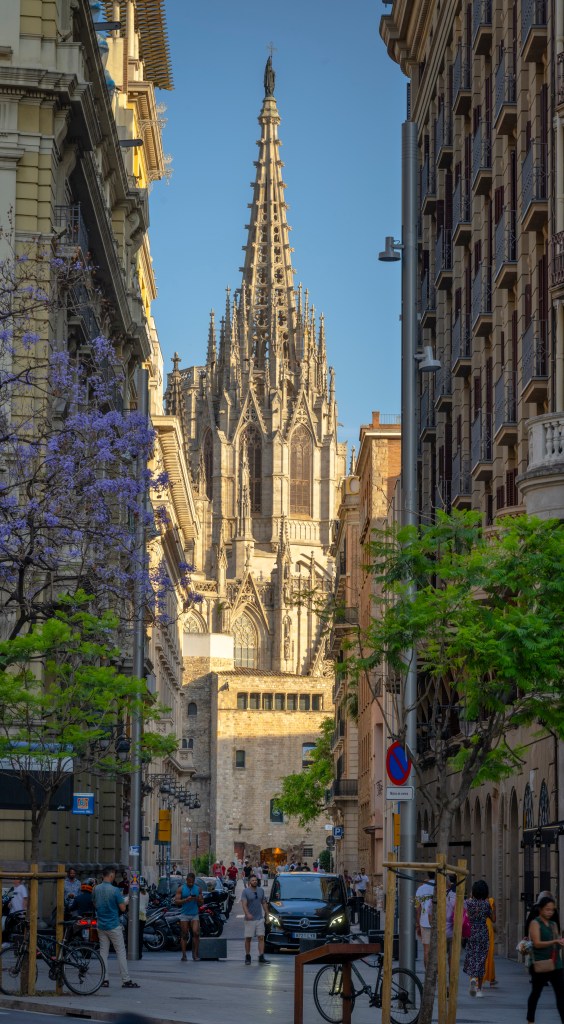
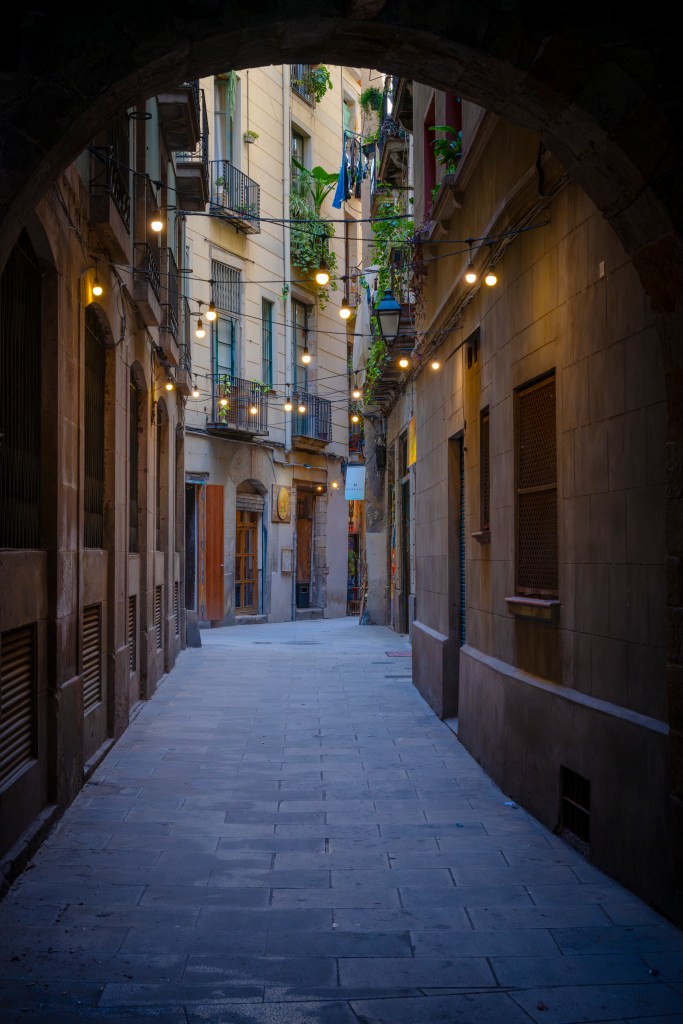
The Cathedral itself was constructed between the 13th and 15th centuries, while the neo-gothic facade was only added in the early 19th century. Behind the Cathedral many of the buildings were restored from 1927 to 1970 as a showing of Catalonian nationalism.
Parc Guell
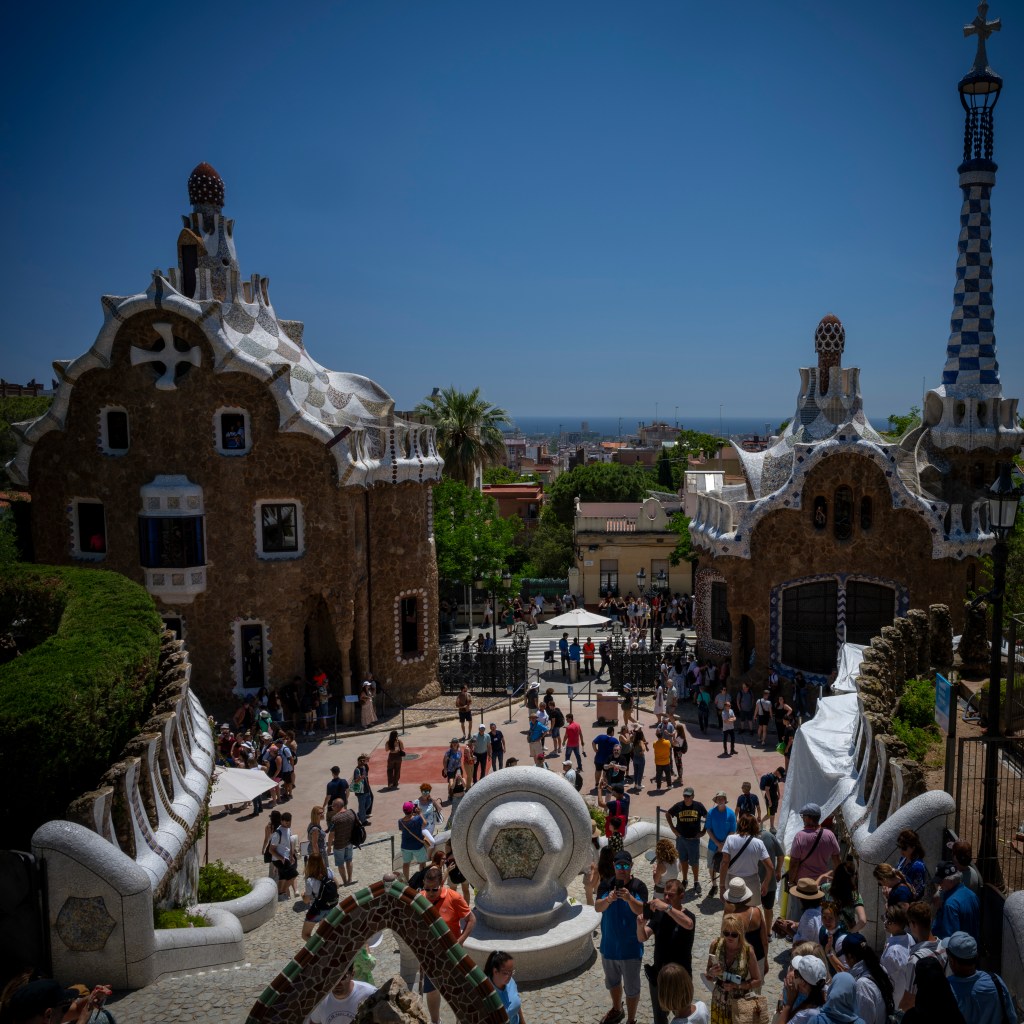
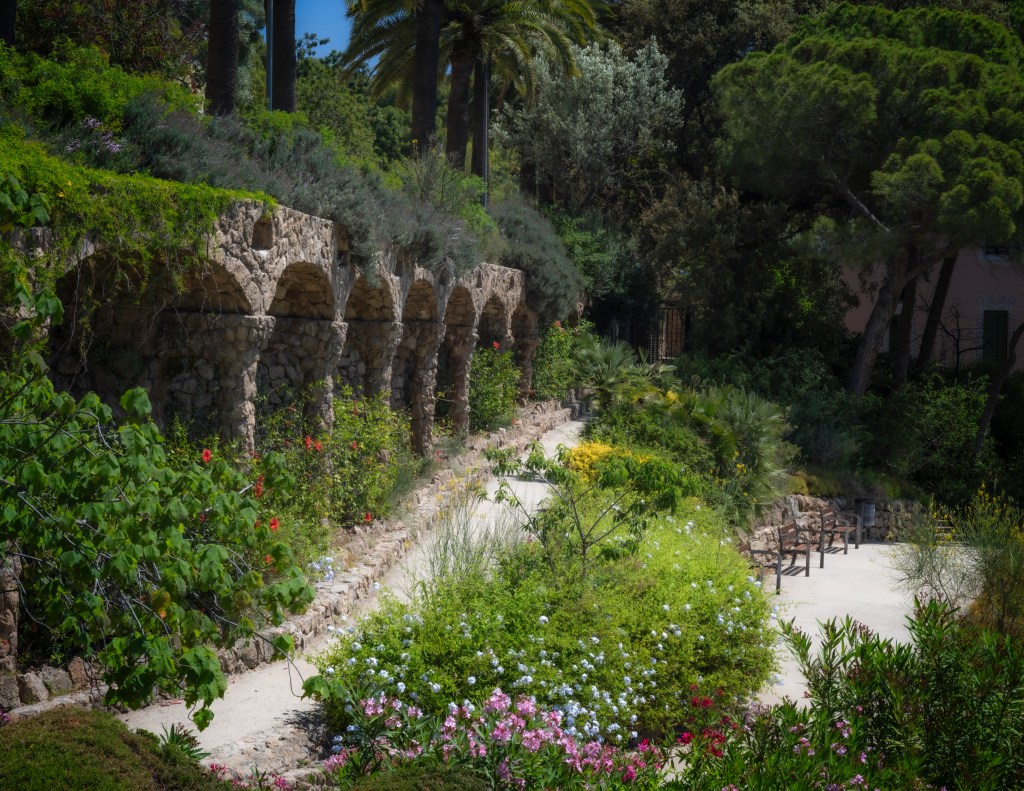
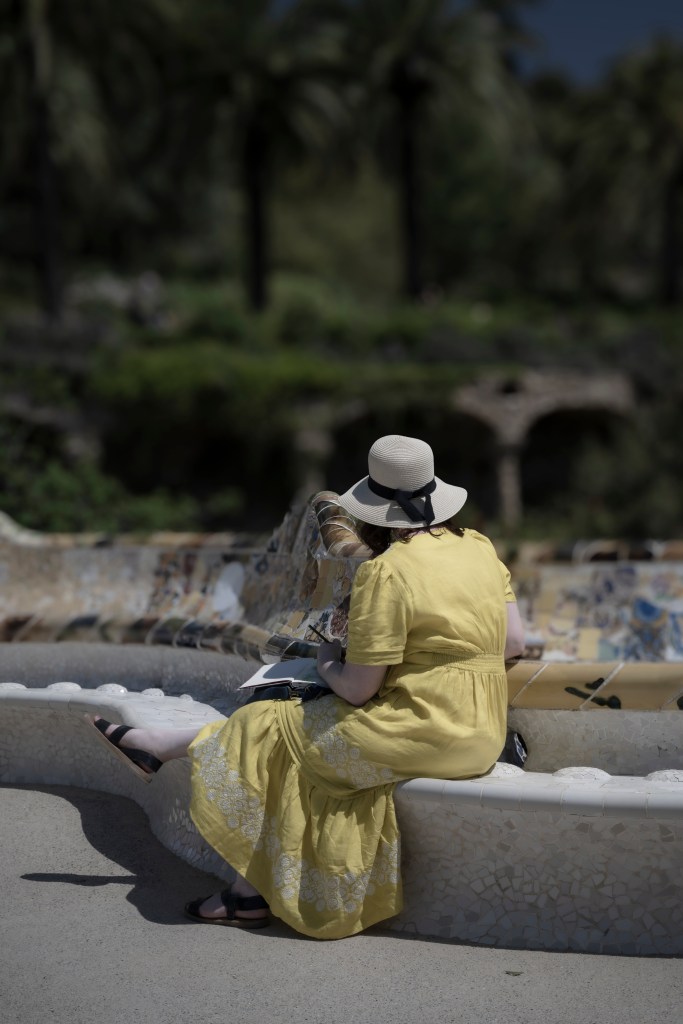
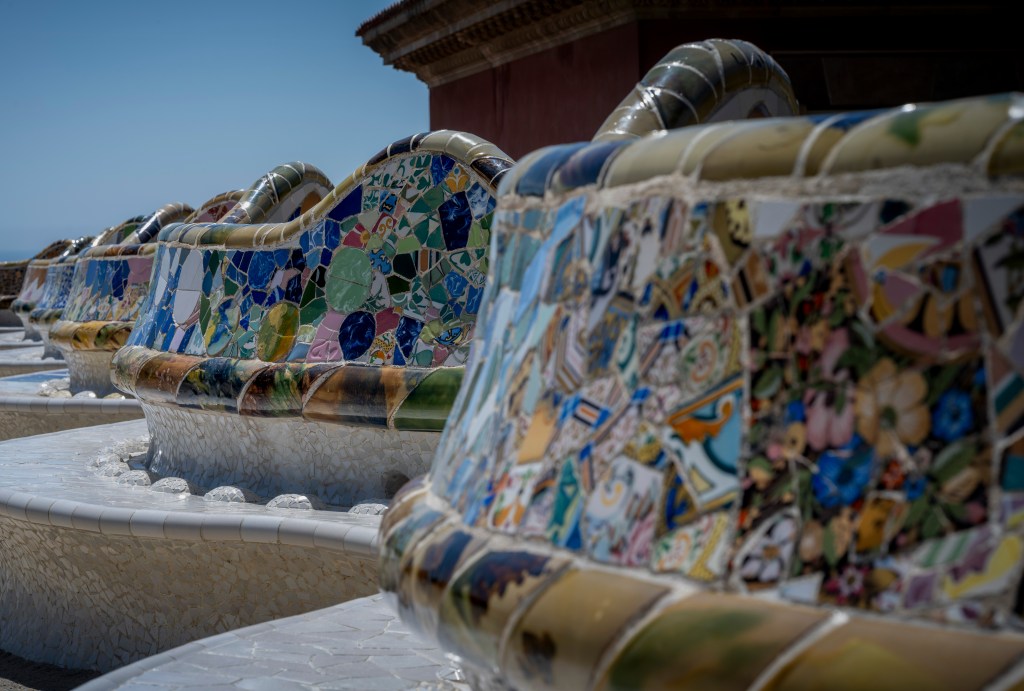
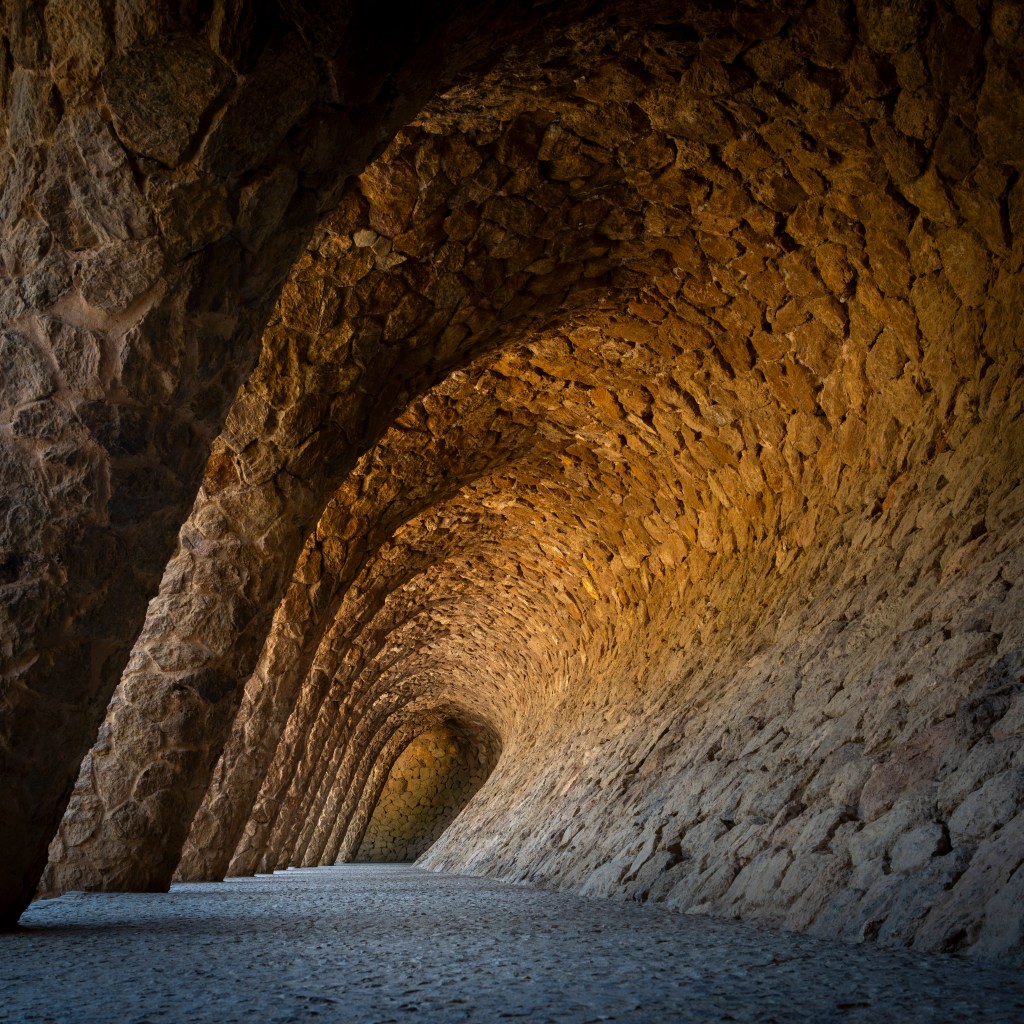
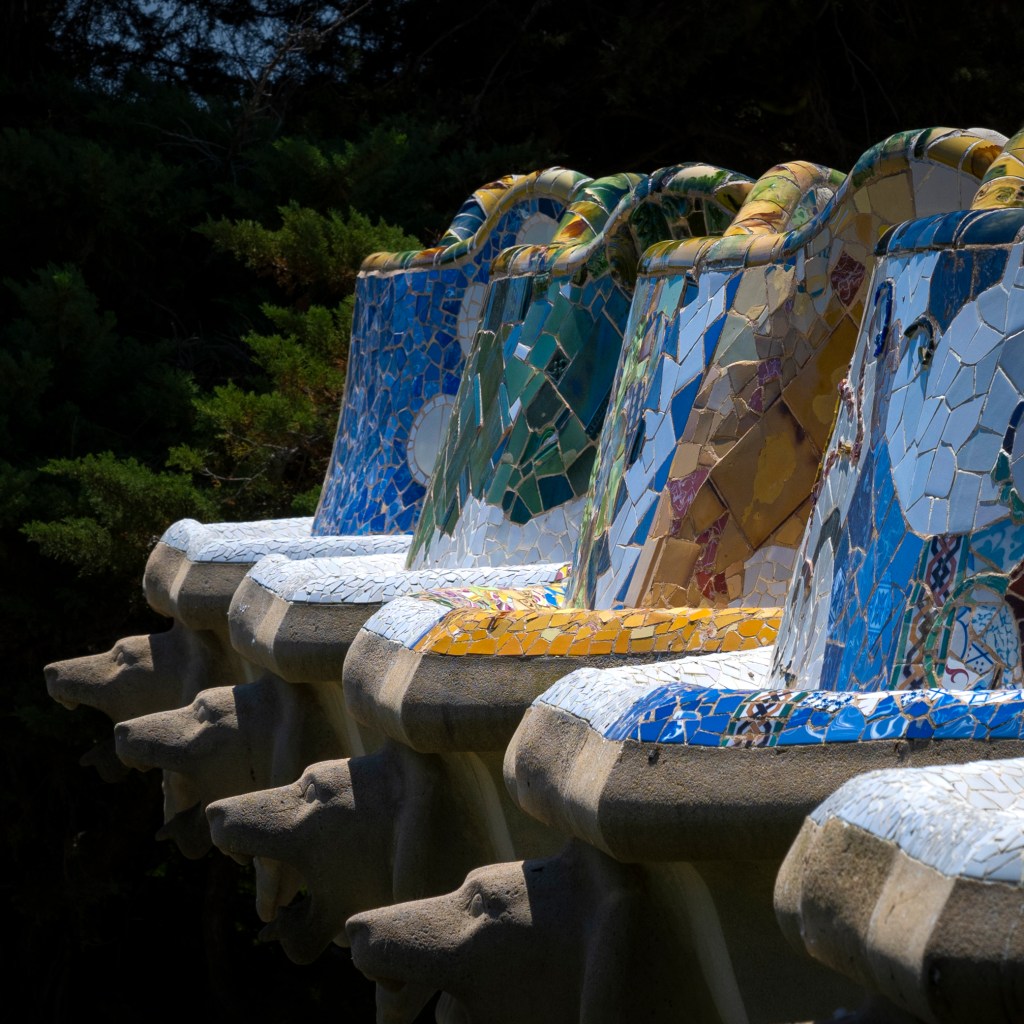
Another very popular (meaning book ahead of your arrival to Barcelona) attraction is Parc Guell. The architect? None other than, you guessed it, Gaudi. Let’s for a second get away from the artistic focus of present day tourism on the Modernista style, back in the early 1900’s, architecture was a business (as it is now) and Modernista was a way to stand out from the crowd; we see this at Casa Mila and Casa Batlo where apartment blocks were being designed to ‘one up’ your neighbors. Parc Guell was no different, it was a real estate project, meant to attract wealthy families to an alluring, green and healthy space on the outskirts of Barcelona, with an artistic flair. Unfortunately it failed as a real estate project (which is no reflection on the attractiveness of the area, projects fail for a lot of reasons), but what has endured was Gaudi’s architecture and innovation to the construction. Definitely worth a visit, but you will need to book your tickets in advance as this is a very popular attraction. Get your tickets here.
Day Trips from Barcelona
There are several day trips within easy access of Barcelona should you choose to expand your horizons. These trips are all reachable on either high speed or regional trains.
Girona
A one hour train ride will get you to the heart of Girona, site of many ‘Game of Throne’ film scenes (there is plenty on that topic on the internet if you search for it). It is also a quint, small city with many attractive sights, especially along the Onyar river with a view towards the hills, especially at sunset. Other popular sights are is the Jewish quarter and synagogue, the Arab hot baths and the city walls. Well worth a wander.
Figueres
Further along the train line from Girona is the village of Figueres whose main claim to fame is the Dali Theater and Museum (built in Dali’s original home in Figueres).
Montserrat
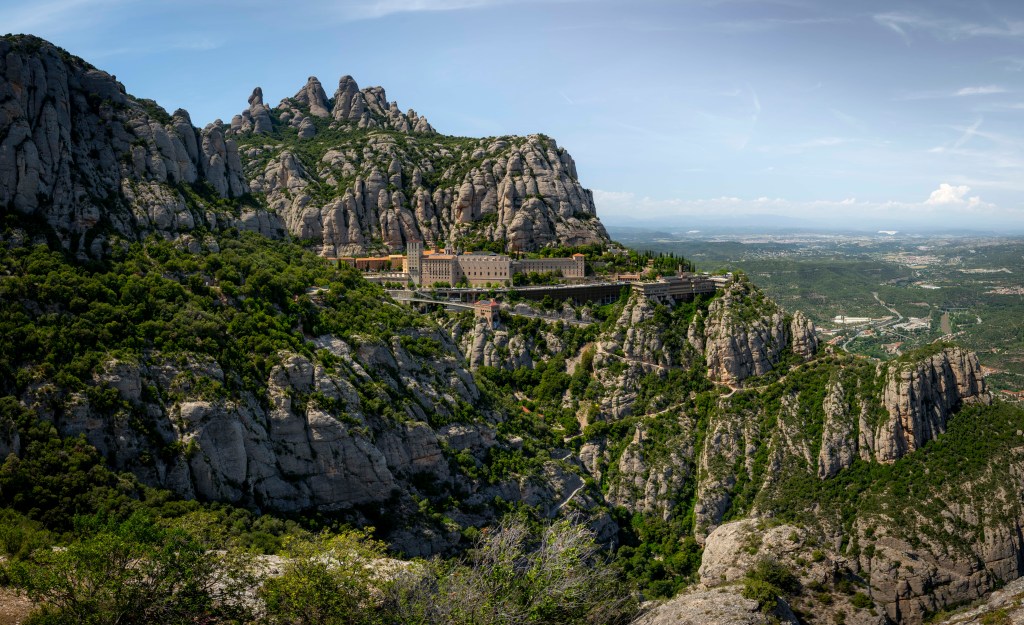
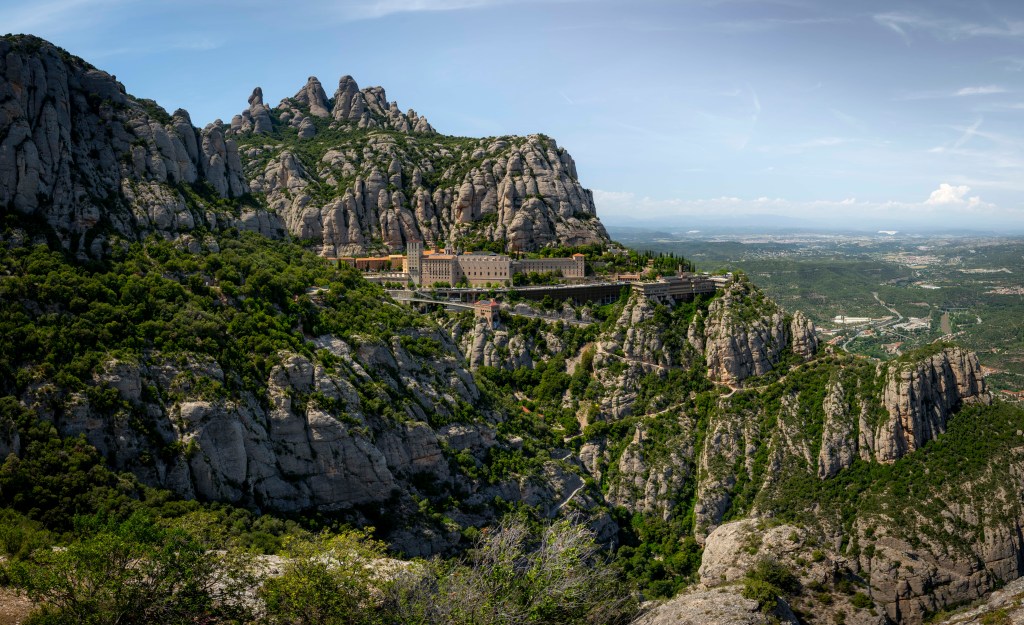
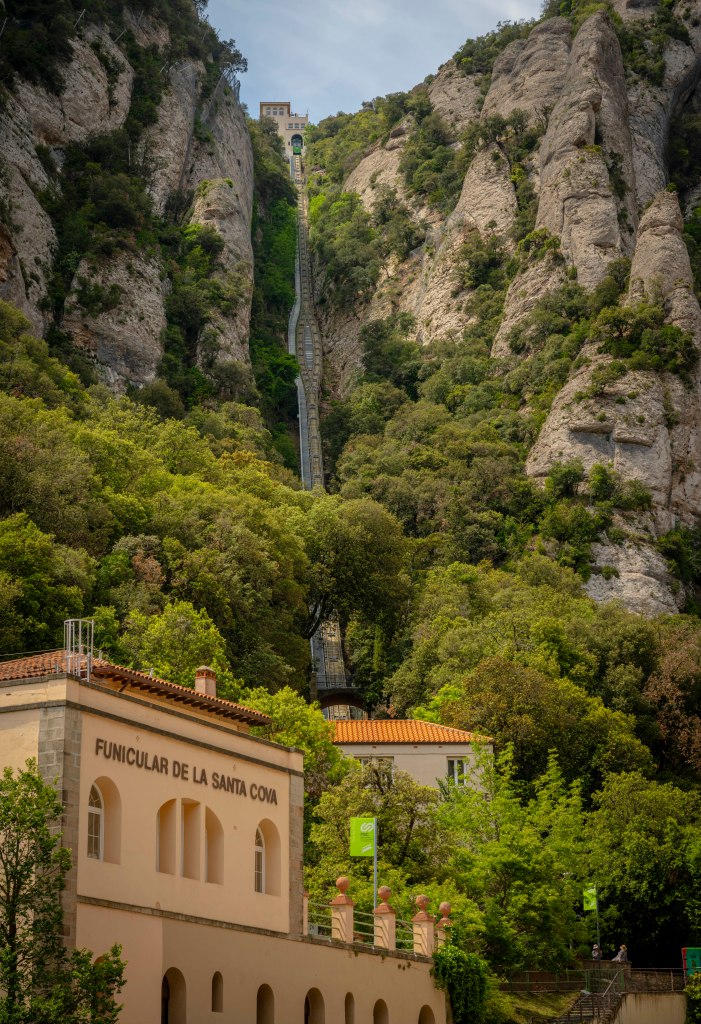
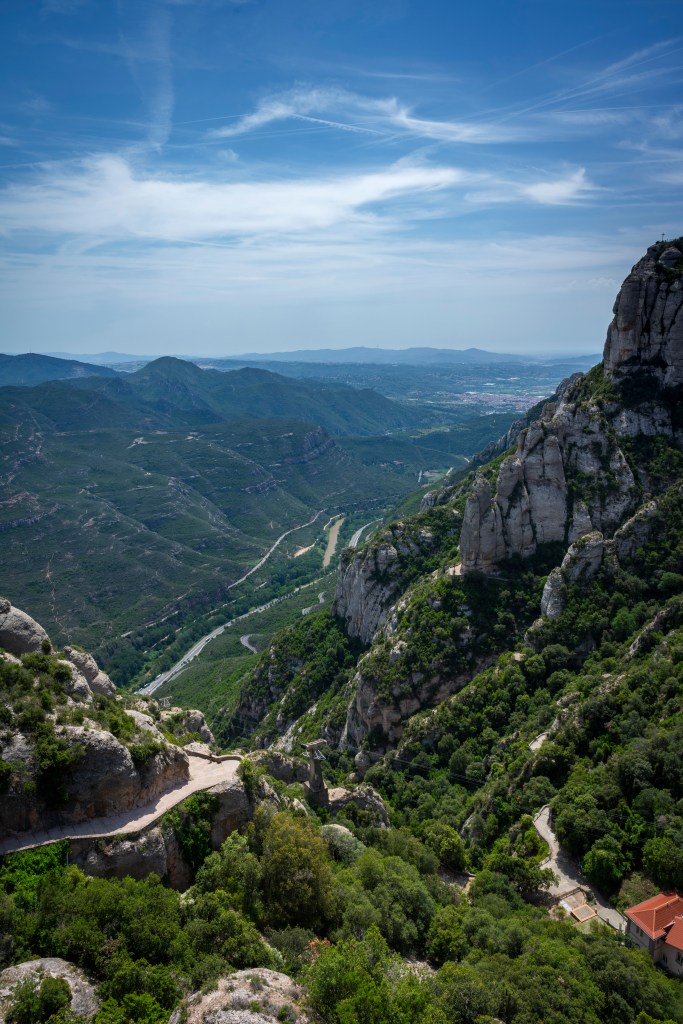
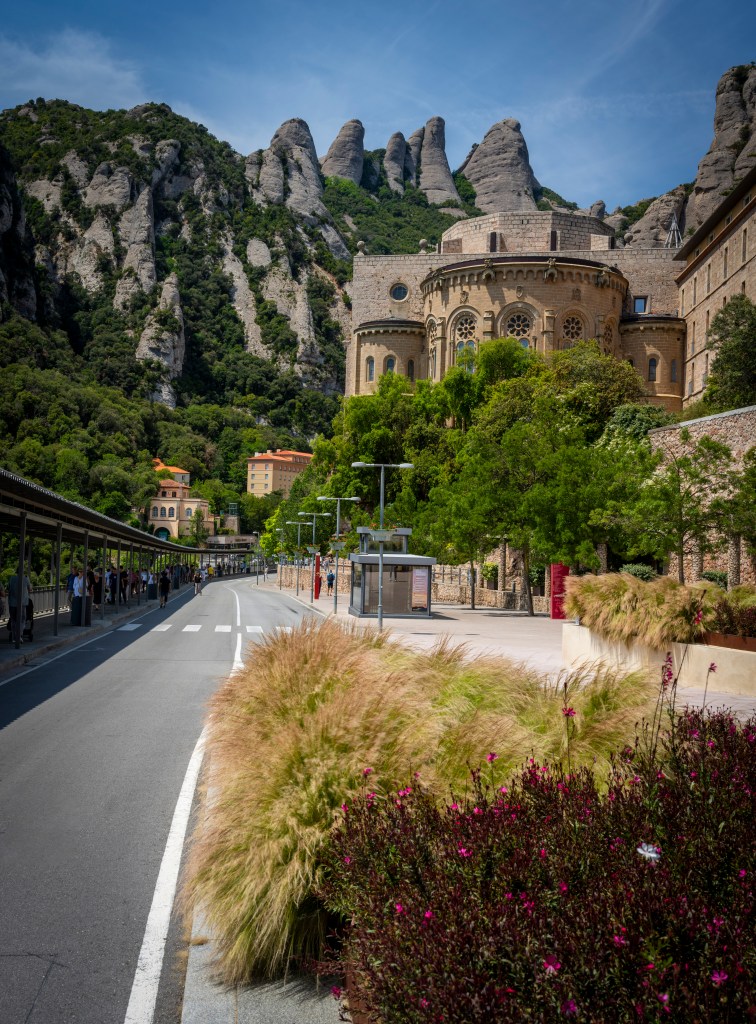
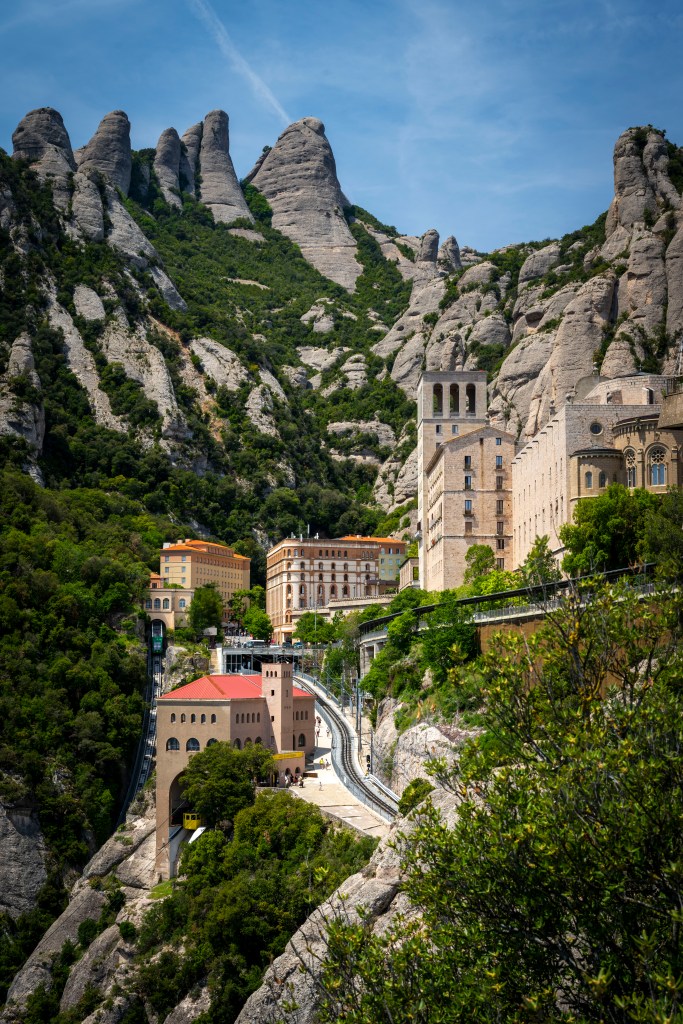
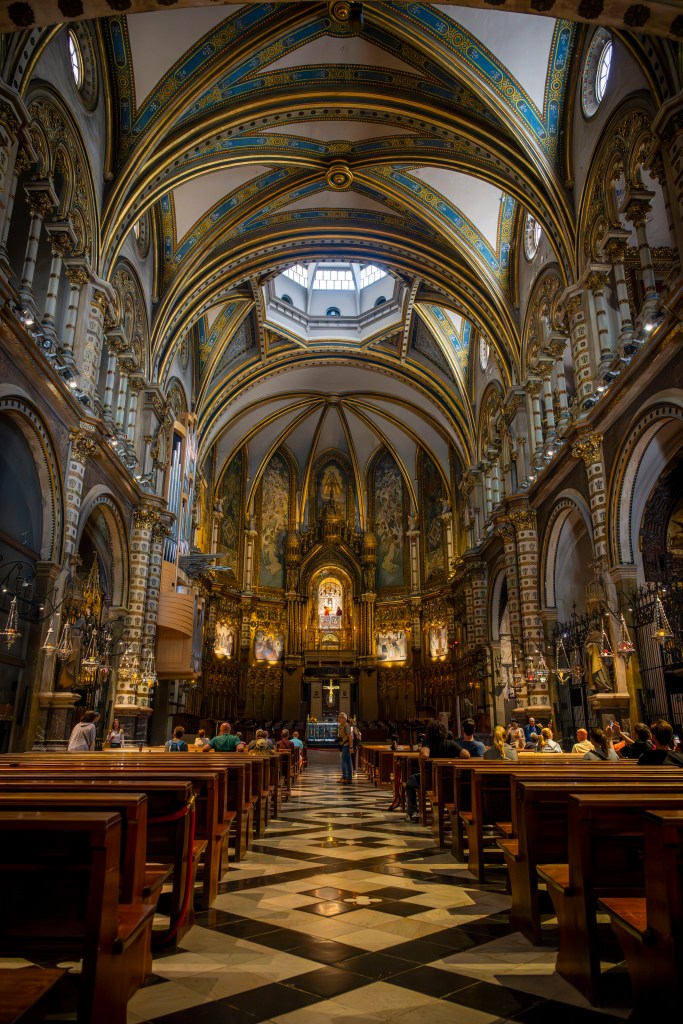
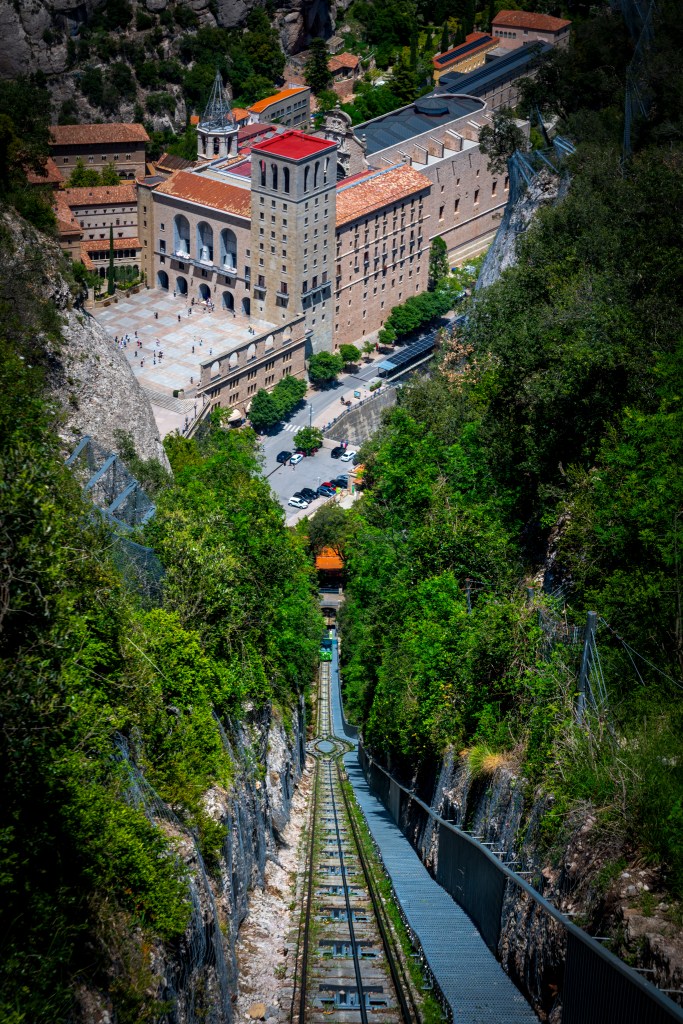
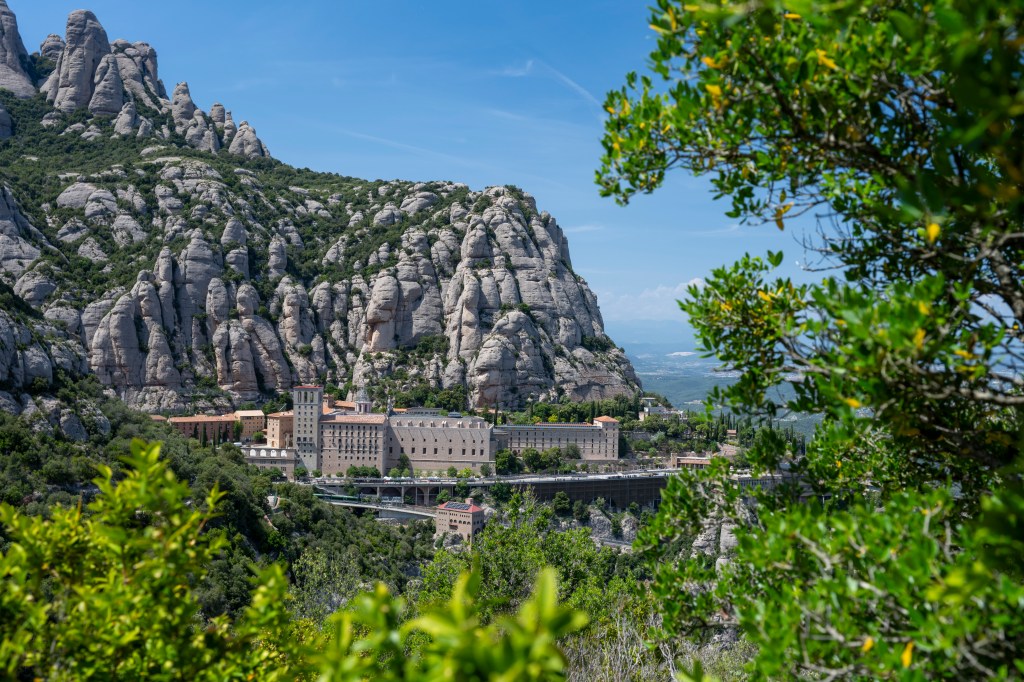
Instead of visiting those locations described above, we opted to visit the monastery in Montserrat, located about 1 hour (by train) from Barcelona. The monastery was started in the early 1900’s by Benedictine monks, who still pray, and work, at the location. Given it’s unique location it has become a popular tourist site, as well as a deeply religious pilgrimage for those so inclined. Nestled in an alcove of the Montserrat mountains, named because of the serrated shape of the mountain peaks, the monastery is a unique and breathtaking site to visit. For tickets we opted to book tickets through this website, which offered one stop convenience since the tickets include access to the Barcelona metro, the regional train to Montserrat, the rack railway (a special train designed to climb the final route to the monastery), and also included access to the two funiculars at the top (one heading to the top of the hills, the other heading down the hill to the Holy Cave). The tickets also included access to the Monastery. There was an option to include access to the Black Madonna, but we did not select that.
A Gallery of my Favorite Images
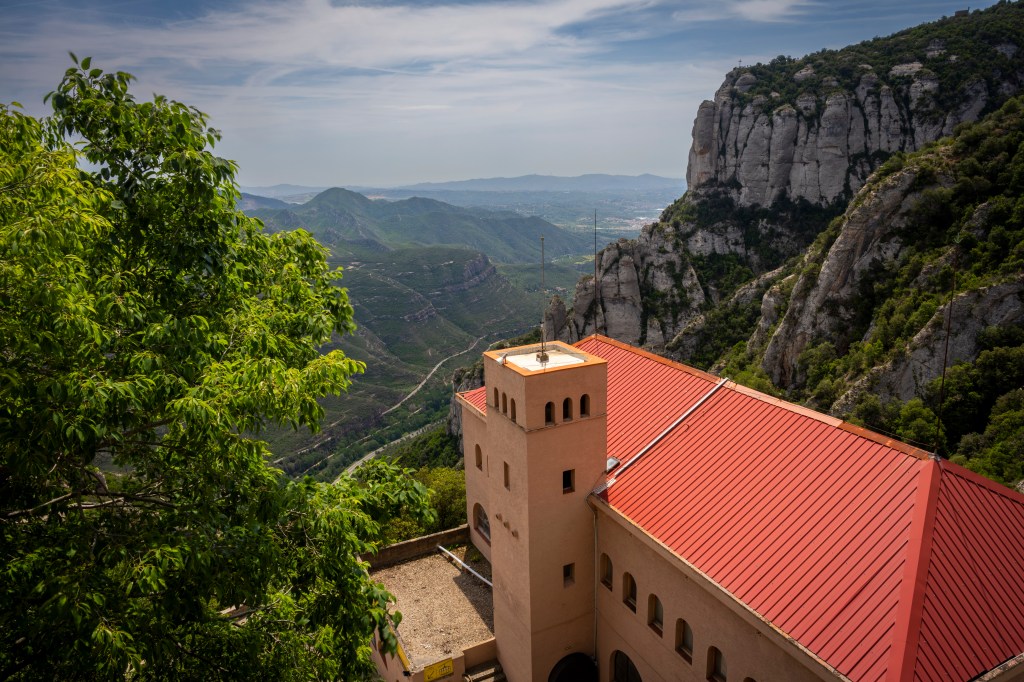
There were some shots I couldn’t incorporate into the story above, so I opted instead to include them, and others into the gallery below. For prints either email me, or click here.



2 thoughts on “Hola Barcelona!”