
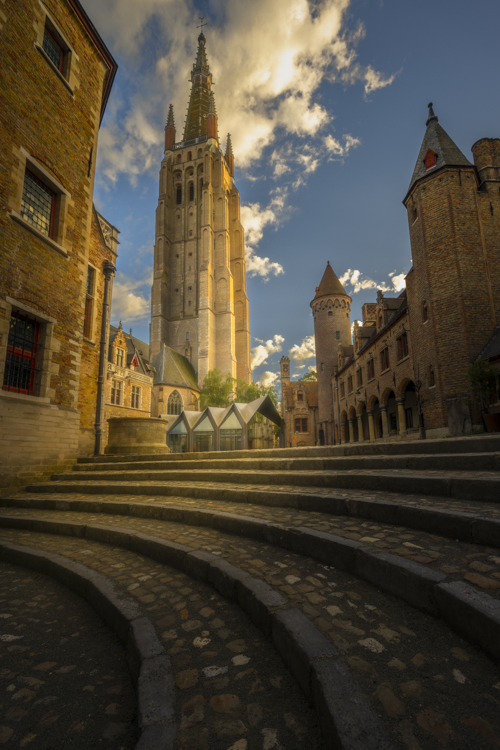
Canals, Gothic Architecture and Soaring Towers – Bruges Delivers!
Bruges is a city built for the camera: swan-filled canals, centuries-old architecture, cobbled streets, and soaring towers come together in compositions at almost every turn.
Often called the Venice of the North, Bruges shares many of Venice’s defining features: an intricate canal network, medieval architecture, and a skyline punctuated by belfries and church towers. Its waterways once connected the city to the sea and helped establish Bruges as a prosperous centre of European trade. By the 16th century, however, silting canals and shifting trade routes had begun a long period of decline.
What Bruges lost in commercial influence, it retained in character. By the mid-19th century, travellers were rediscovering its remarkably intact medieval core. The city survived two world wars with much of its heritage preserved, and later restoration efforts revived its historic buildings and public spaces. Today, that continuity is a major part of its photographic appeal.
Bruges can be intensely busy during the day, but around sunrise and sunset the city becomes quieter and more atmospheric. With fewer people in the frame, long shadows, soft light, and reflections on the canals take centre stage. When the clouds cooperate, the entire historic centre feels purpose-built for landscape and architectural photography.
Photography Locations in Bruges
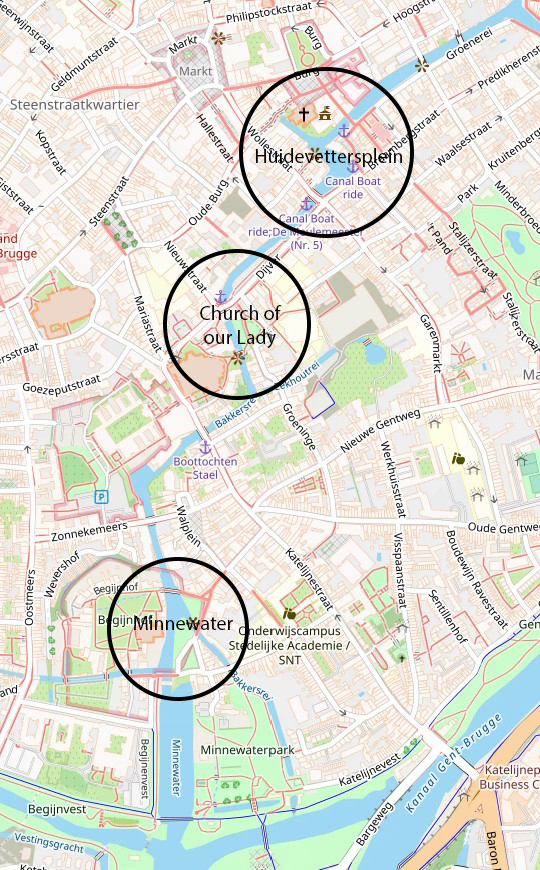
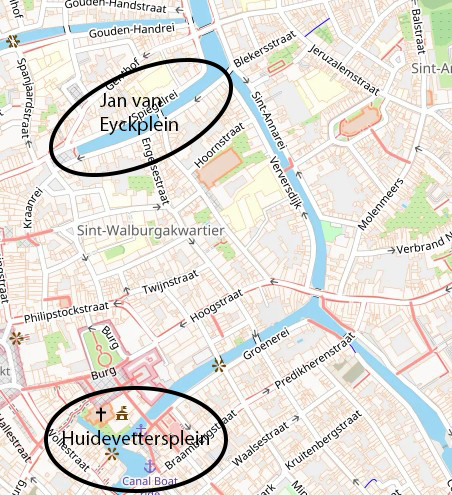
Although the entire city rewards exploration, I returned repeatedly to four areas that offered the strongest combination of light, architecture, water, and atmosphere:
- Minnewater: A tranquil gateway to the canal system, framed by bridges, trees, historic buildings, and reflective water.
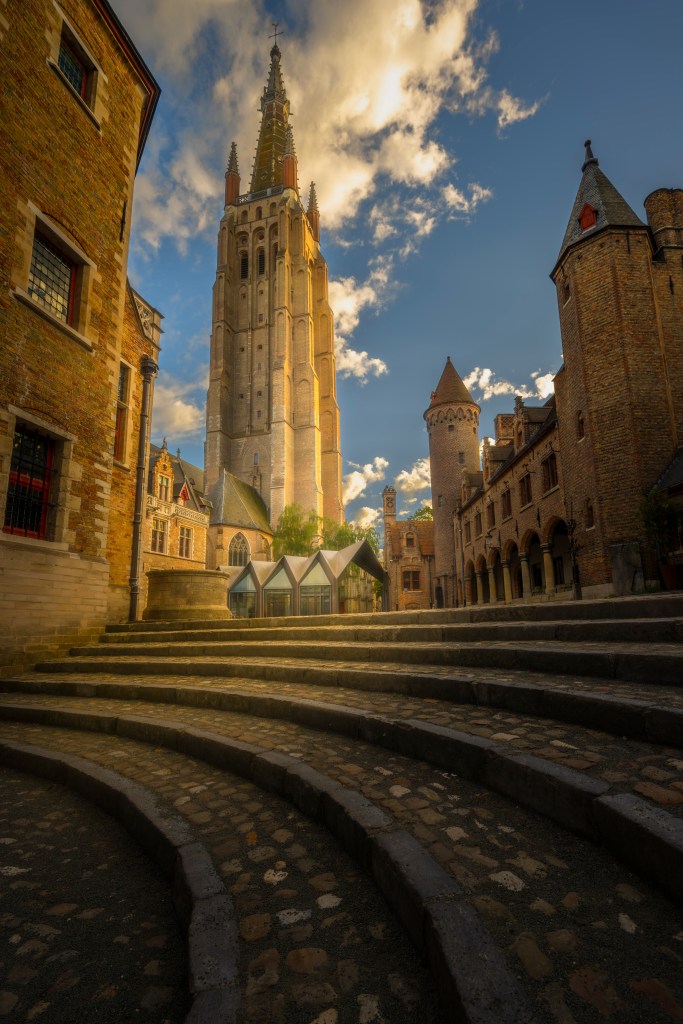
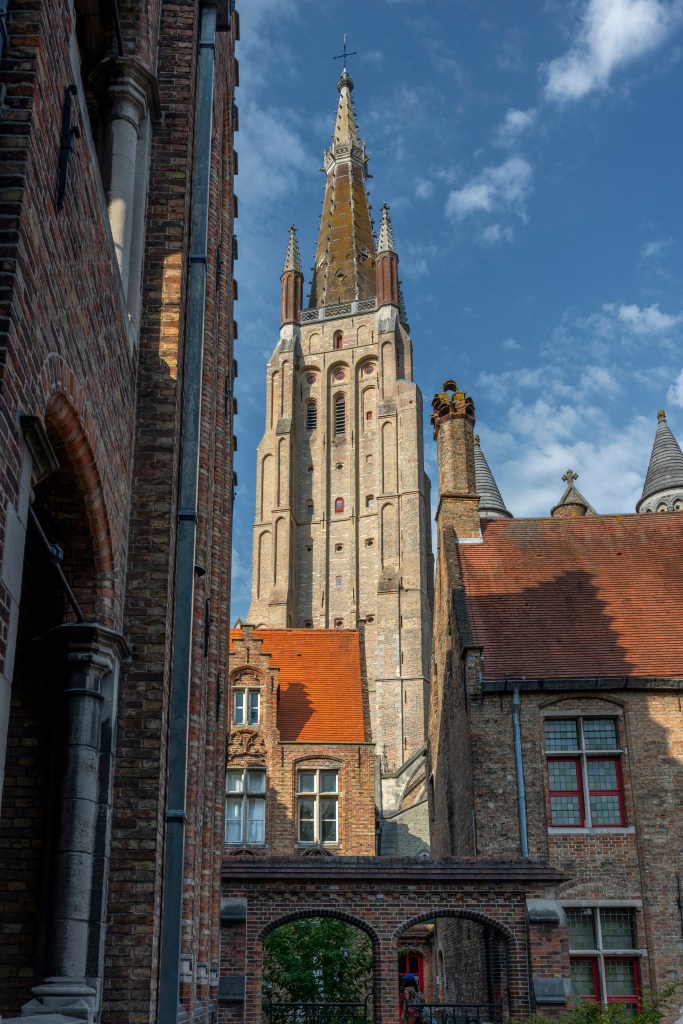
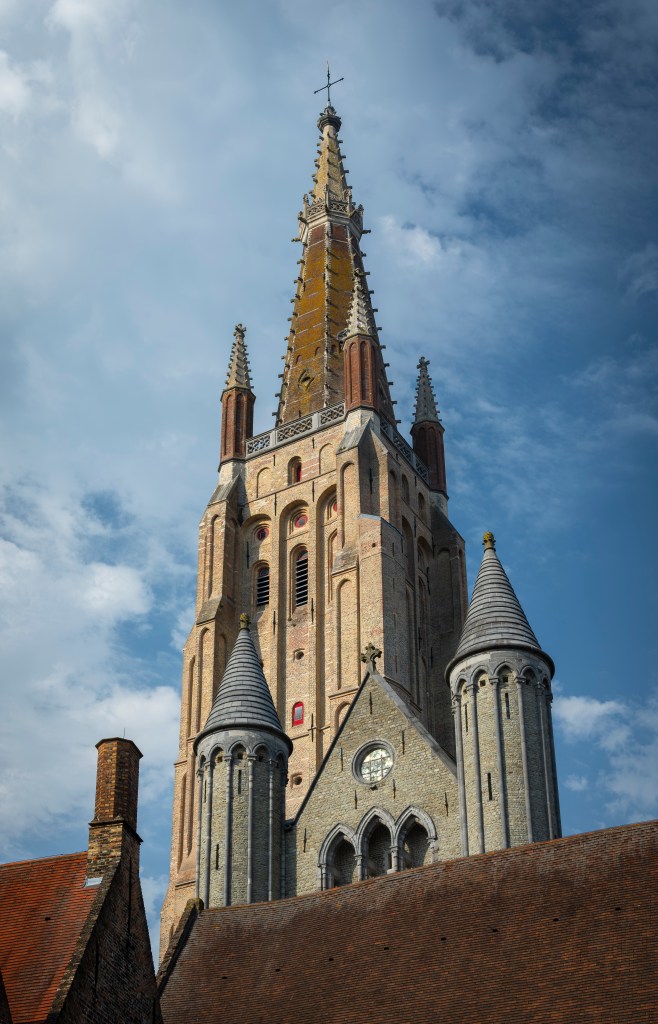
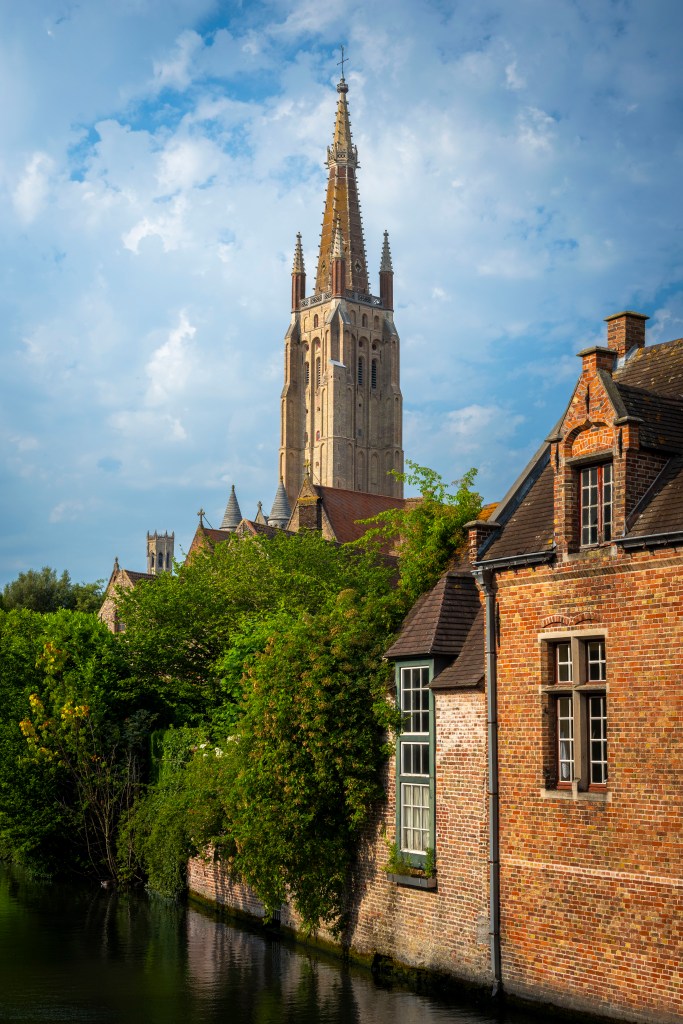
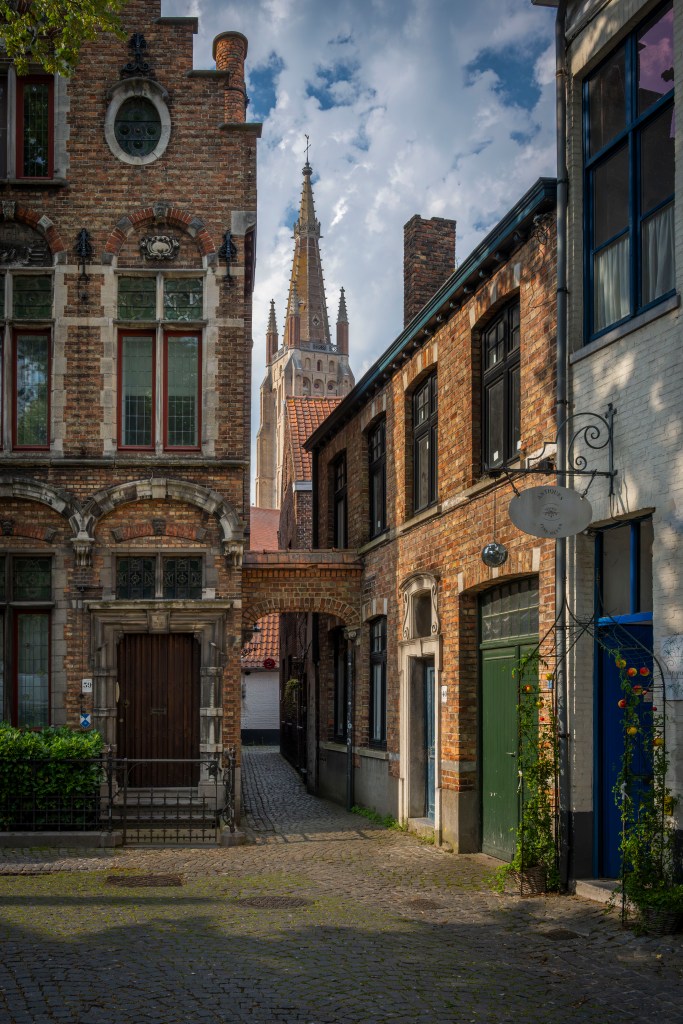
- Church of Our Lady: Its 115.6-metre tower is visible throughout Bruges and works beautifully as a background subject from canals, lanes, and public squares.
- Huidenvettersplein: Near the Dijver Canal, this area offers the classic Bruges view of the Belfry rising above historic waterfront buildings.
- Jan van Eyckplein: A compact square where canals, elegant façades, and the legacy of one of Bruges’ most celebrated artists converge.
The photographs in this guide are organized around these four locations.
Minnewater: Reflections, Swans, and Quiet Mornings
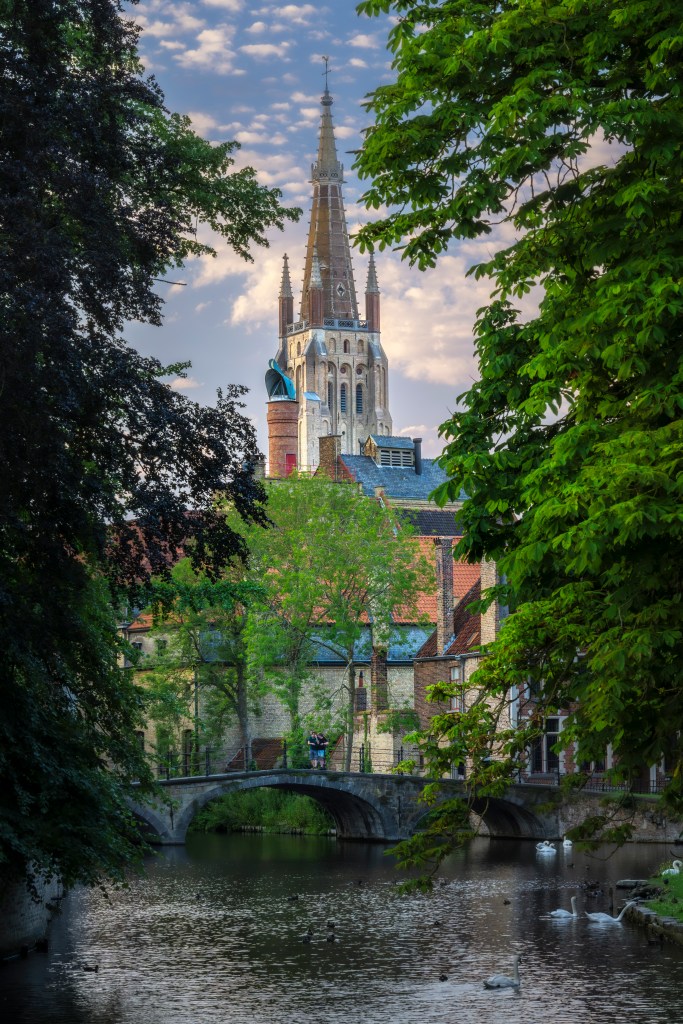
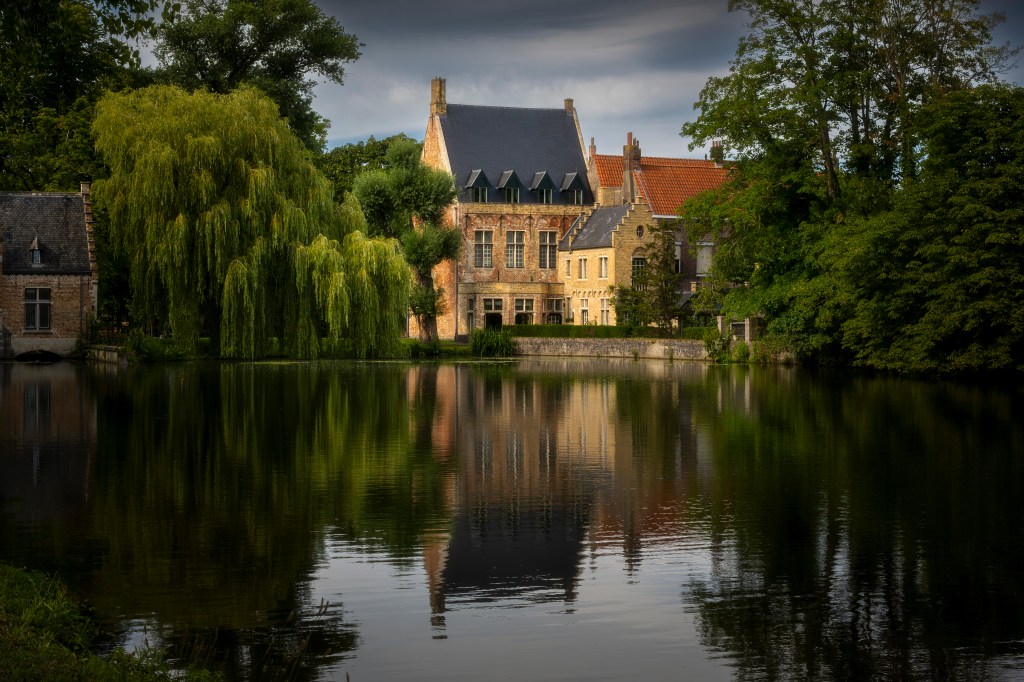
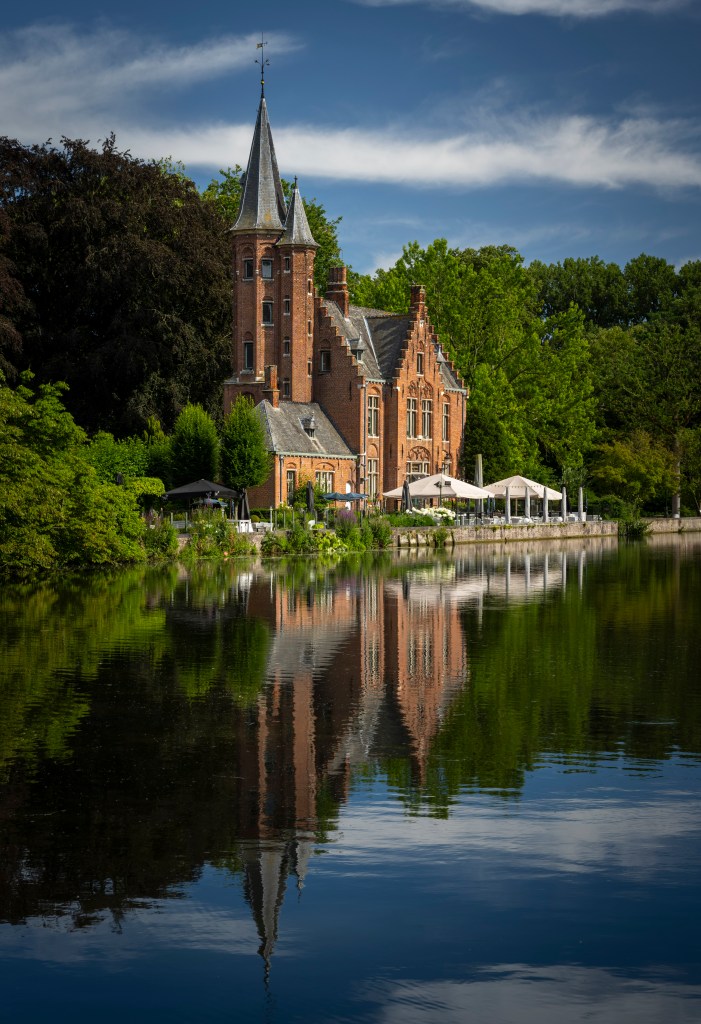
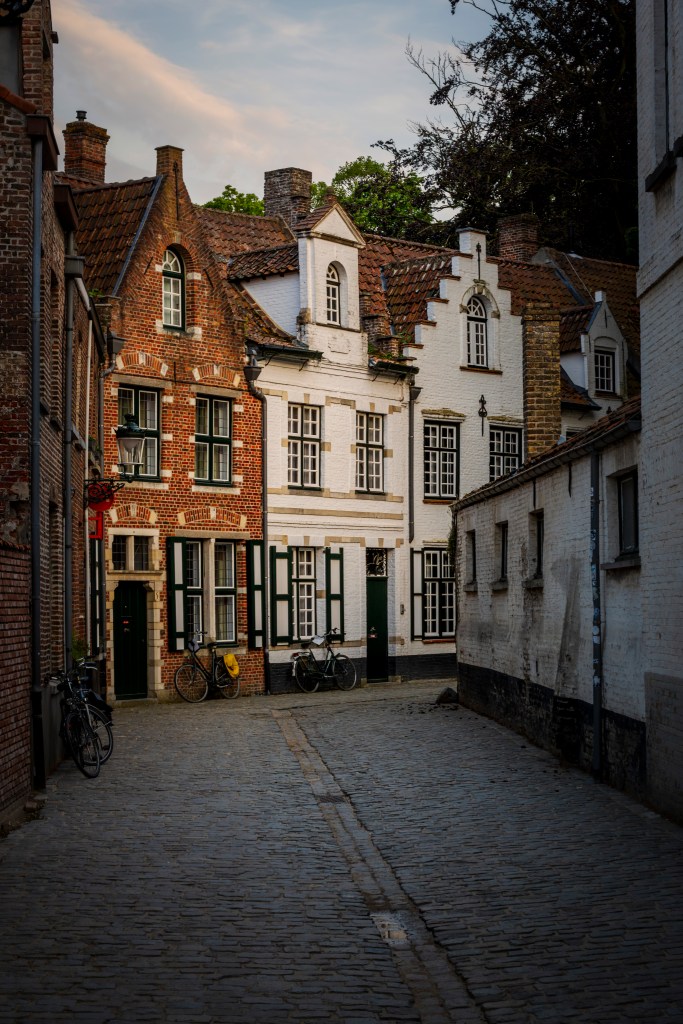
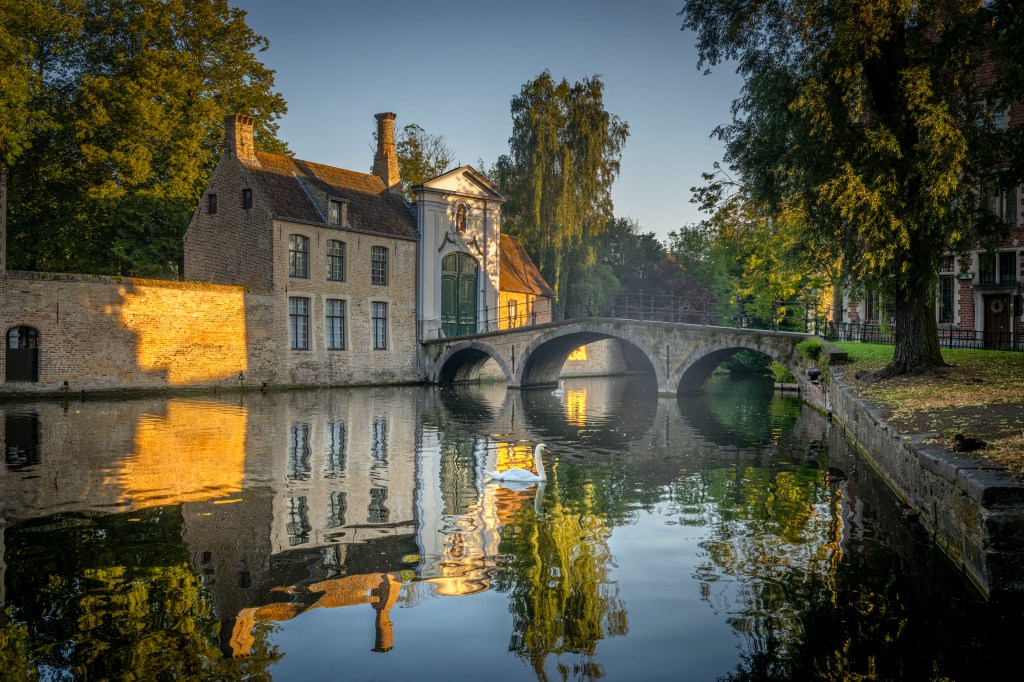
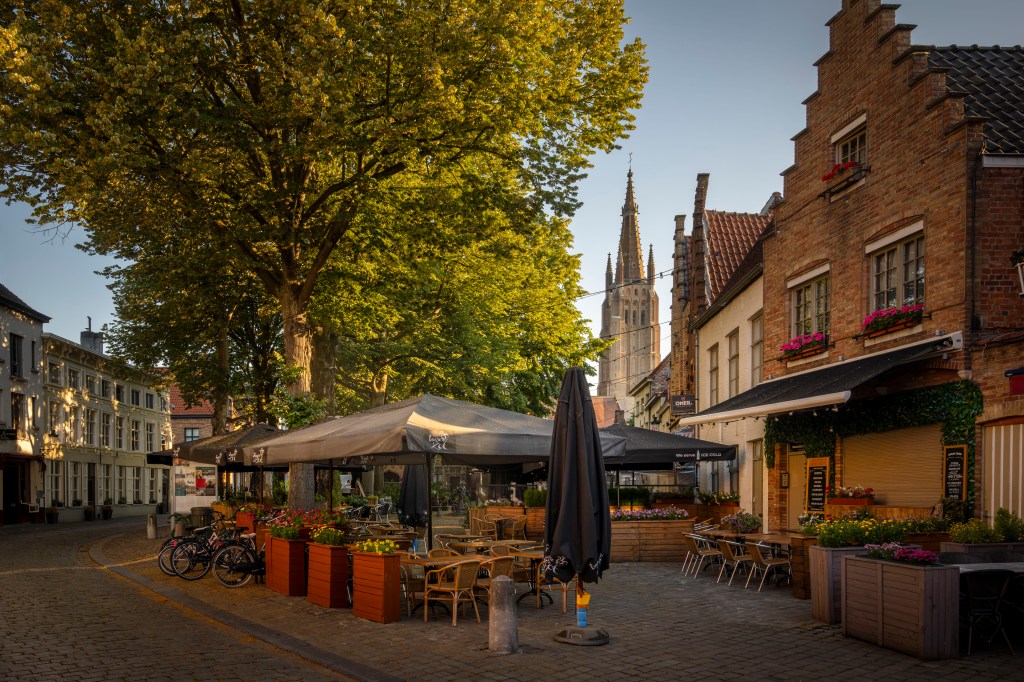
Minnewater is a peaceful park of canals, weeping willows, and swans, but its calm appearance hides a working past. The area once served as a harbour where small boats transferred cargo arriving from inland cities such as Ghent. Today, the lake functions as a reservoir that helps regulate Bruges’ canal levels. For photographers, it offers cobbled lanes, graceful bridges, the Begijnhof courtyard, and several strong views of the Church of Our Lady.
Enjoying this guide? Subscribe for new photography locations, behind-the-shot stories, and practical field tips.
Church of Our Lady: Building Compositions Around a Landmark
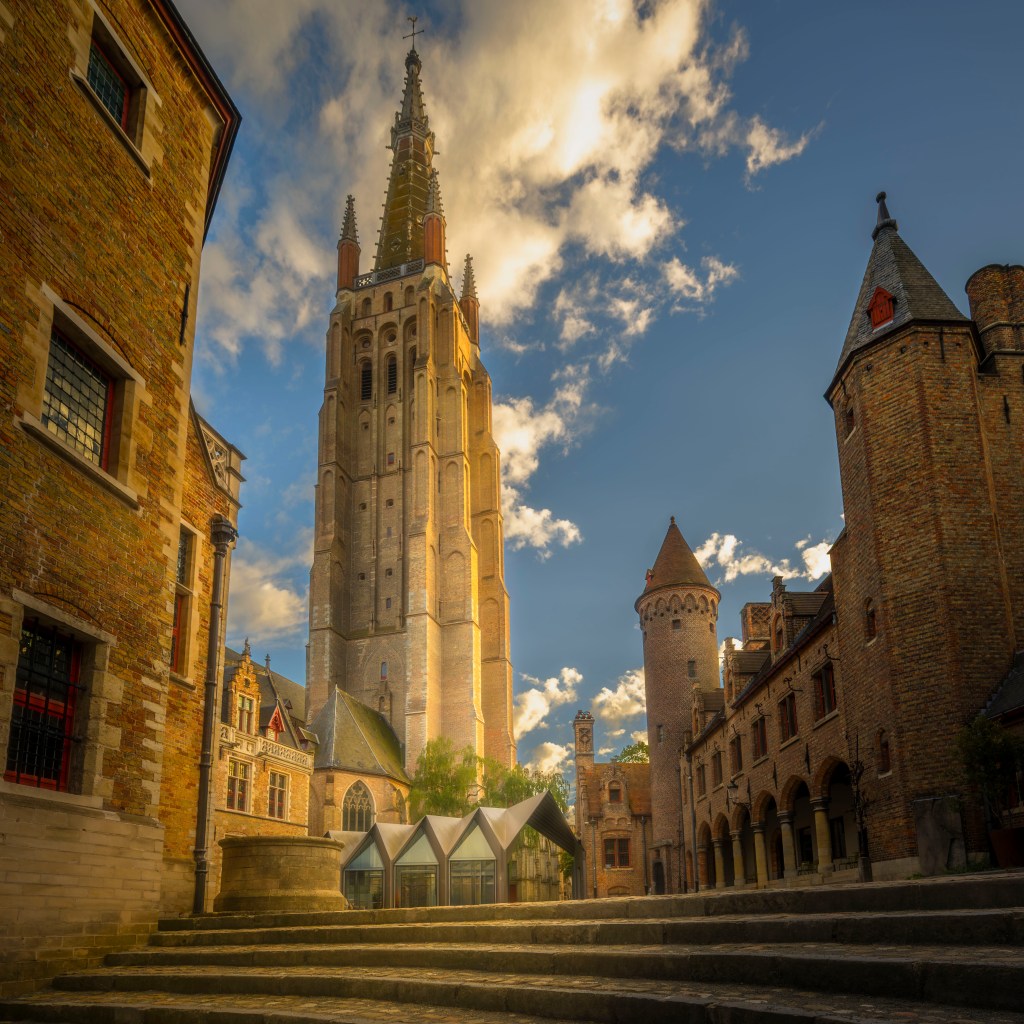
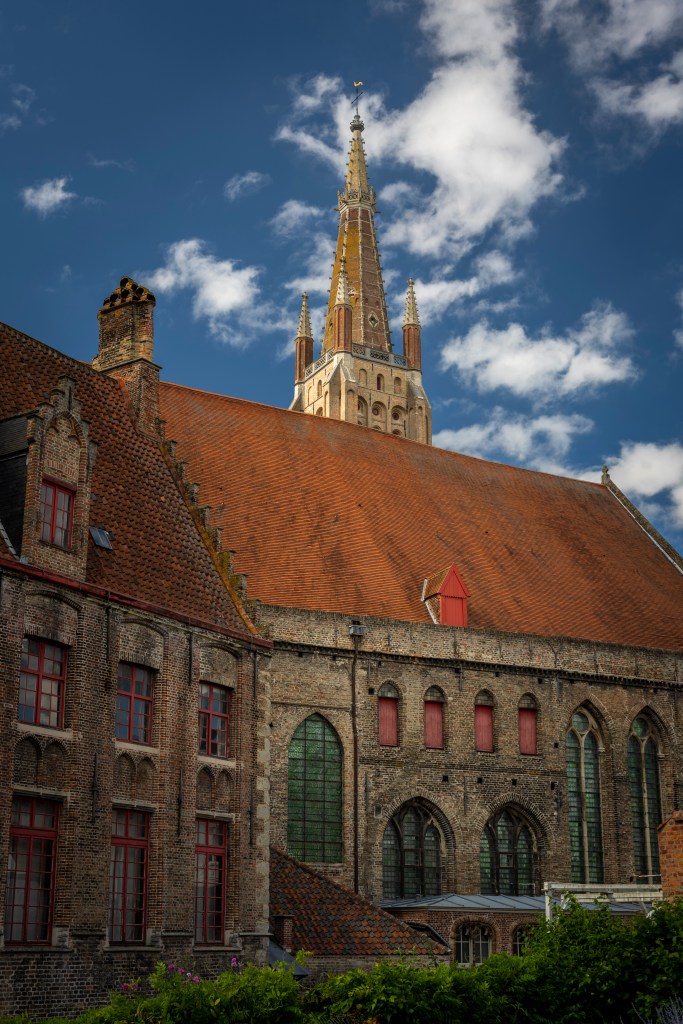
Onze-Lieve-Vrouwekerk, or for the Flemish challenged amongst us, the Church of our Lady, is a Roman Catholic church dating to the 13th, 14th and 15th centuries. Its 115.6-metre brick tower is the tallest structure in Bruges and one of the city’s most dependable visual anchors.
Finding the Strongest Angles
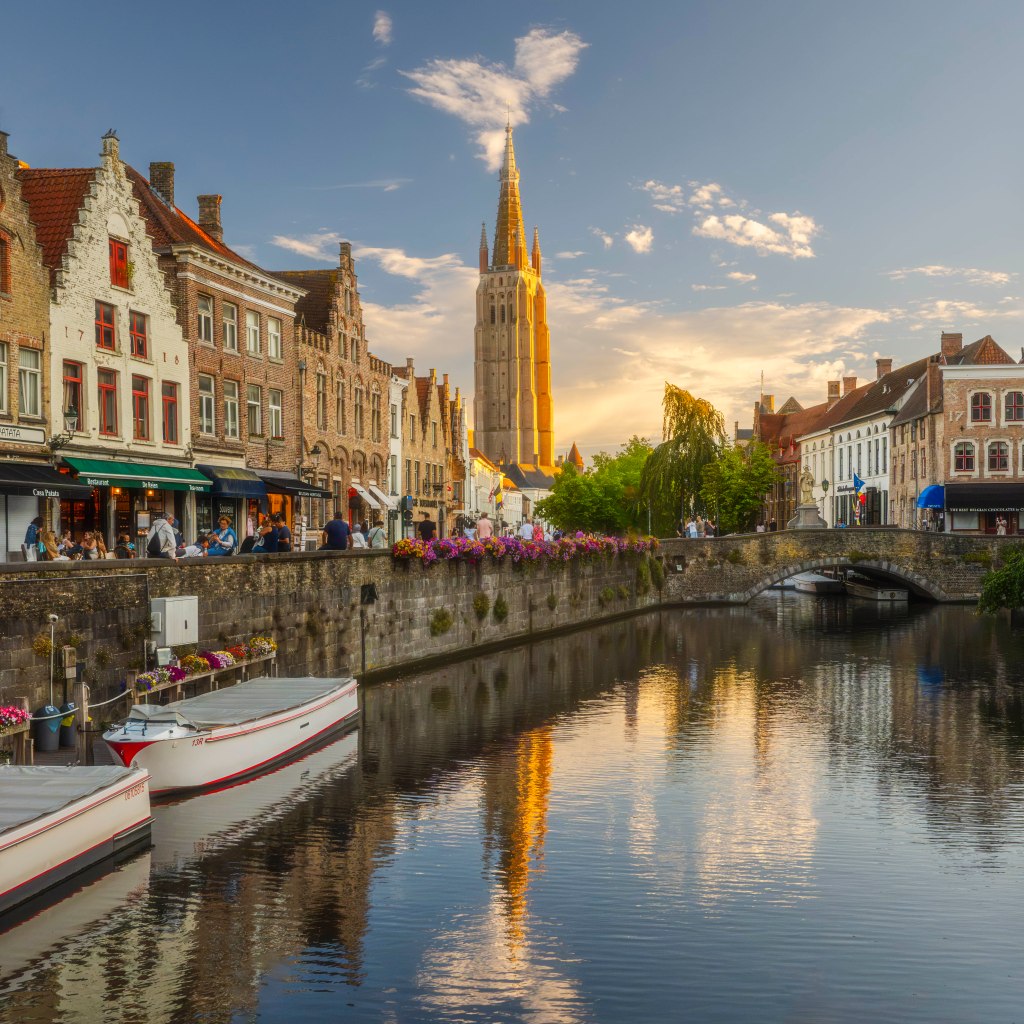
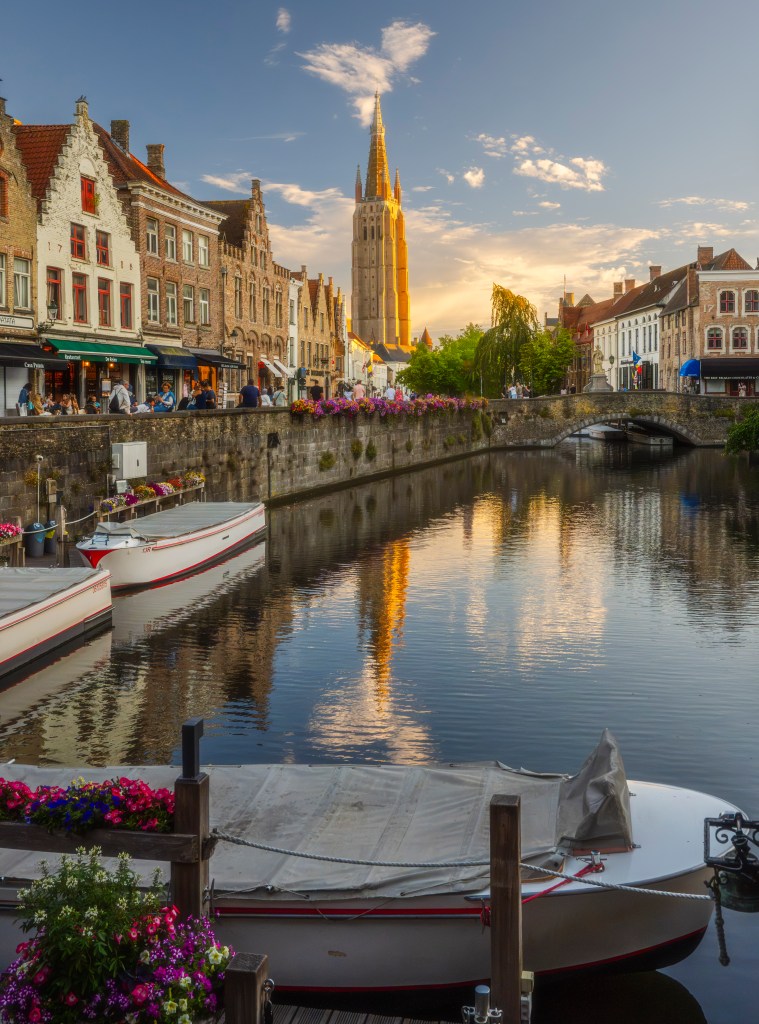
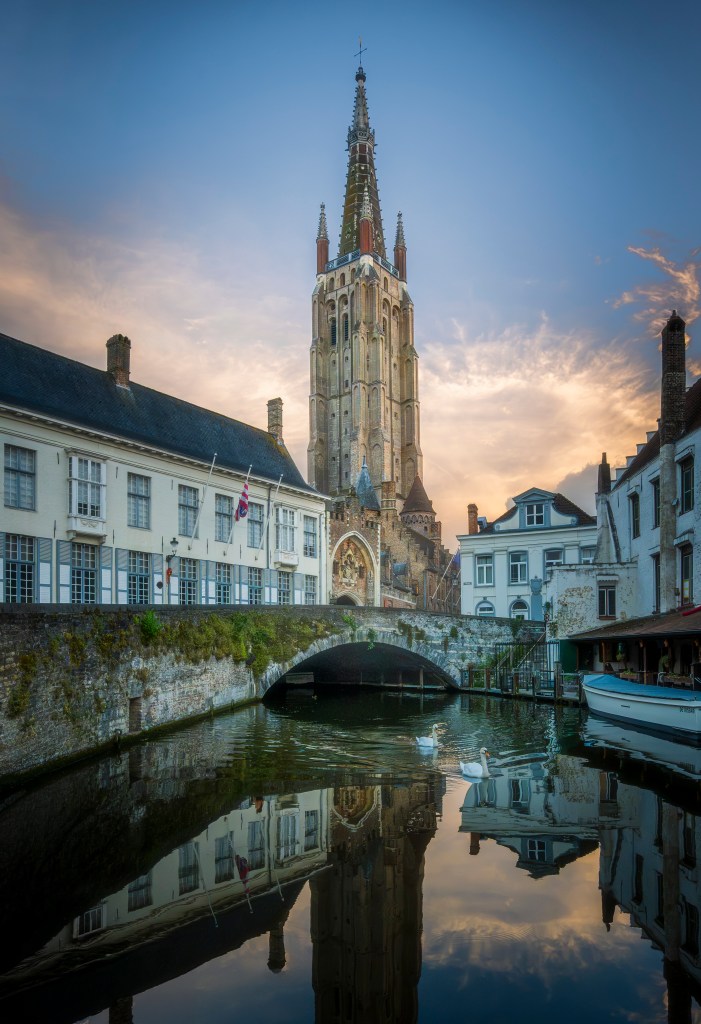
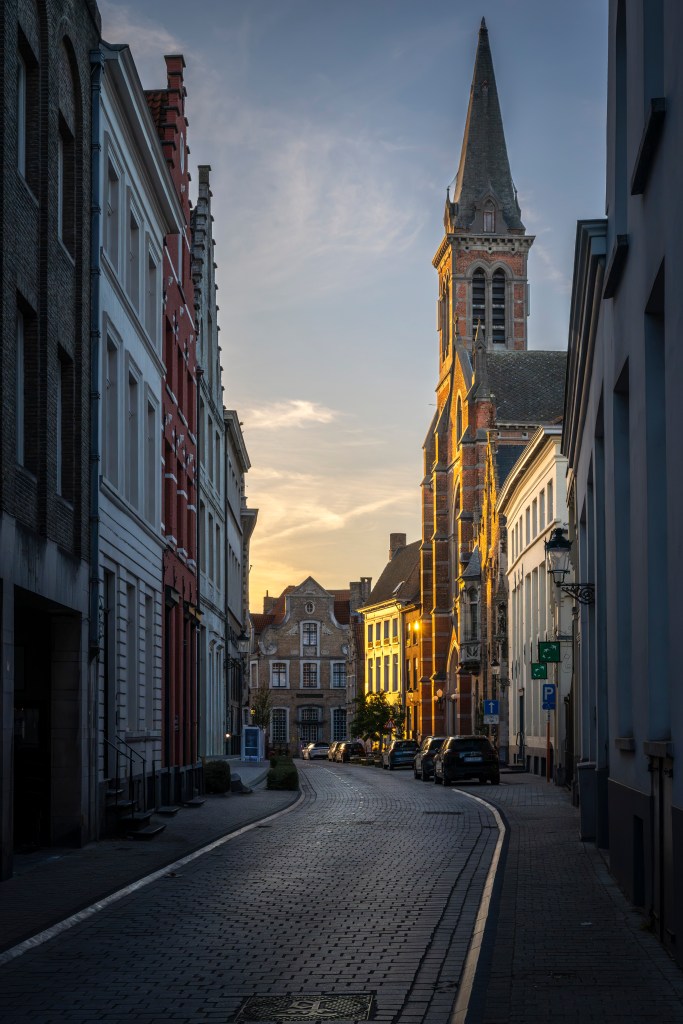
I spent hours exploring alleys, canal paths, and plazas in search of compositions that used the tower as a background subject. Canal views were a natural starting point because they introduced reflections and leading lines; with patience, a passing swan occasionally added a perfectly timed foreground element. In late June, the setting sun illuminated the tower from the right and wrapped the brickwork in warm, gentle light.
Huidenvettersplein: Creating the Classic Bruges Photograph
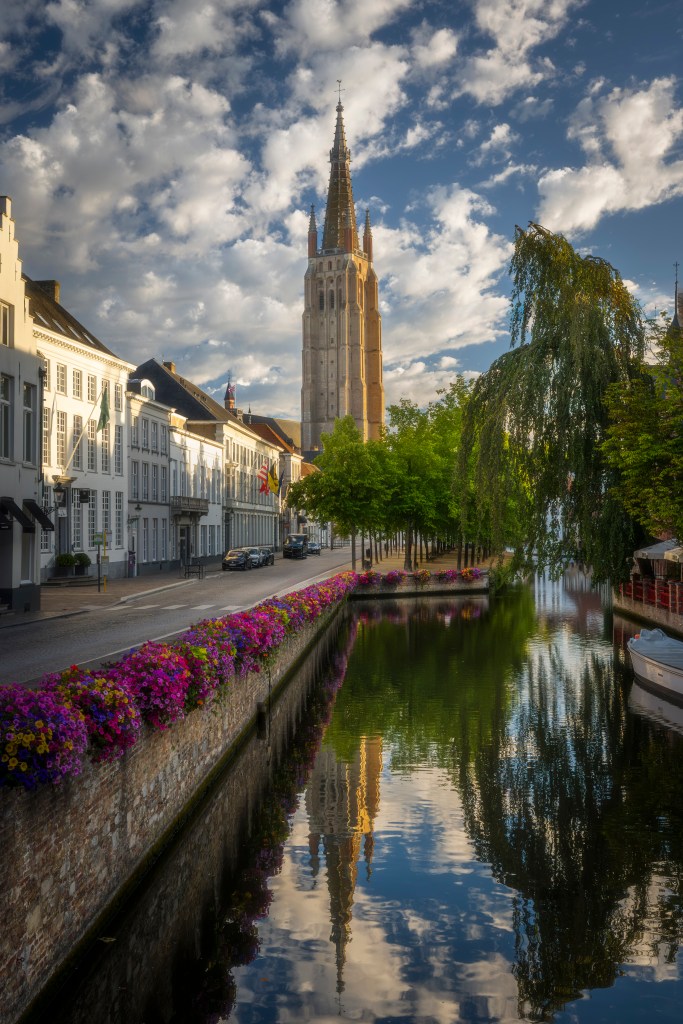
This small restaurant-lined square near the Church of Our Lady is worth visiting for one reason alone: the picturesque view across the Dijver Canal toward the Belfry and historic waterfront. It is the quintessential Bruges postcard composition. Familiar? Certainly. But the layered architecture, reflective water, and dominant tower make it compelling enough to revisit under changing evening light.
My visit coincided with the summer solstice, when the sun set toward the North Sea to the right of the Belfry. The composition was straightforward: the Belfry on the right, enough canal to capture reflections, and the row of buildings across the water to balance the frame. The real variable was the sky.
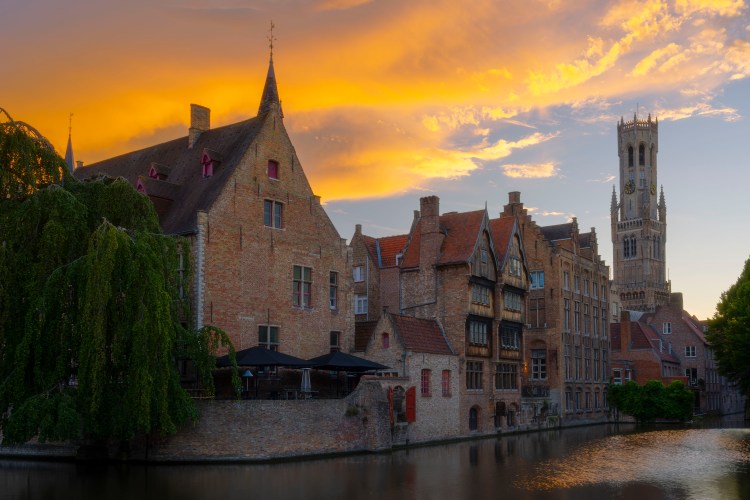
Great Sunset, Flat Architecture
The first evening delivered an excellent sunset, but the buildings lacked depth. By the time the floodlights came on and gave the façades more definition, the strongest colour in the clouds had disappeared. It was a useful reminder that the best sky and the best architectural light do not always arrive at the same moment.
I returned the next two evenings, waiting until after sunset for the floodlights to illuminate the scene. The two resulting photographs present different approaches to the same composition. Before reading the story behind them, decide and even better, leave a comment about which version you prefer.
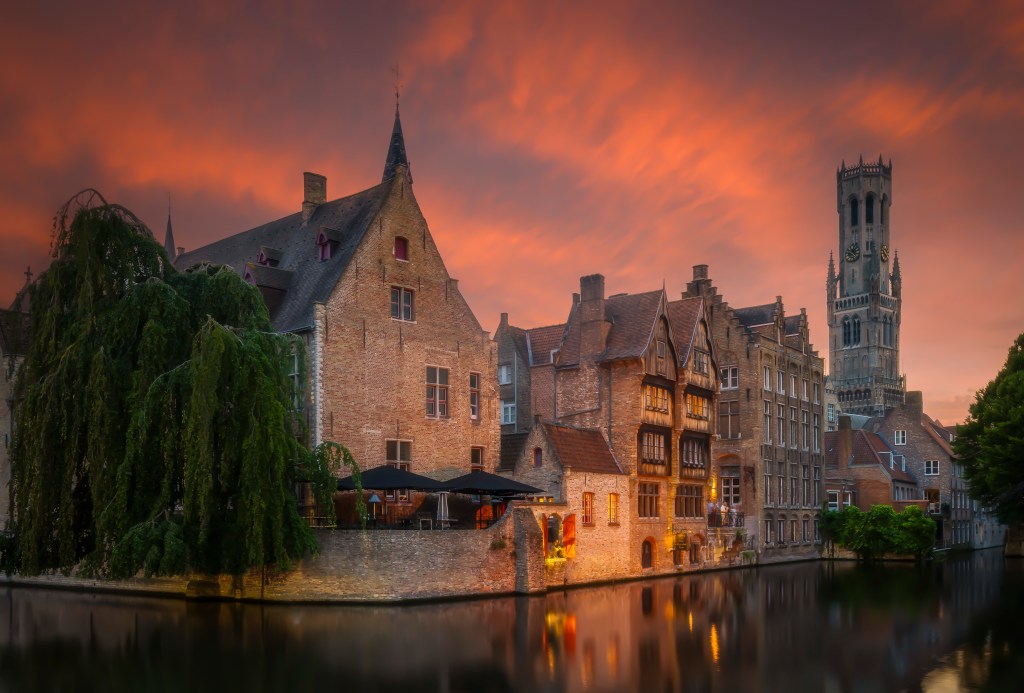
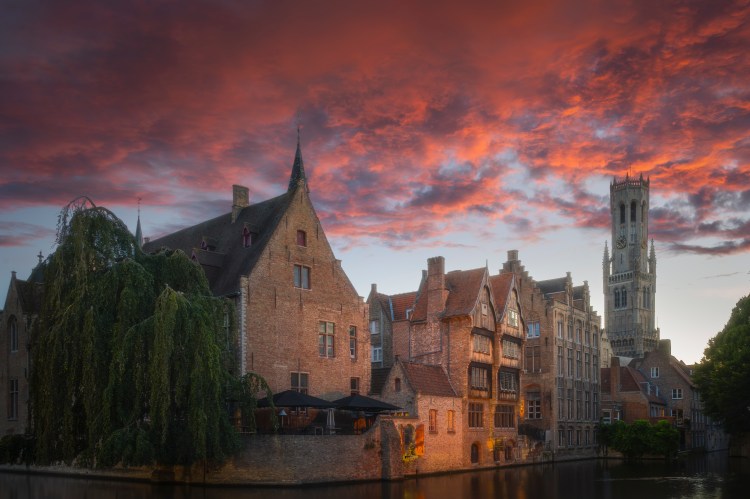
Which photograph works better for you? Share your choice in the comments.
The answer to whether the sunset cooperated is both yes and no. For the first image, the original sky was lifeless, although I liked the exposure and detail in the buildings and Belfry. I therefore tested a sky replacement using one of my own sunset photographs. The result is convincing, but transparency matters: it is a composite.
The second image—my third attempt at this location—was the clear winner. Clouds drifted in from the left, the sun fell below the horizon and painted them deep magenta, and the floodlights added shape and warmth to the architecture.
This stretch of canal offers far more than one famous viewpoint. Water, medieval façades, flowers, and—if you are fortunate—swans create layers that can be recombined simply by walking the canal and changing perspective. One of my favourite images of the Church of Our Lady came from here; its soft light and reflections give it an almost painterly quality.
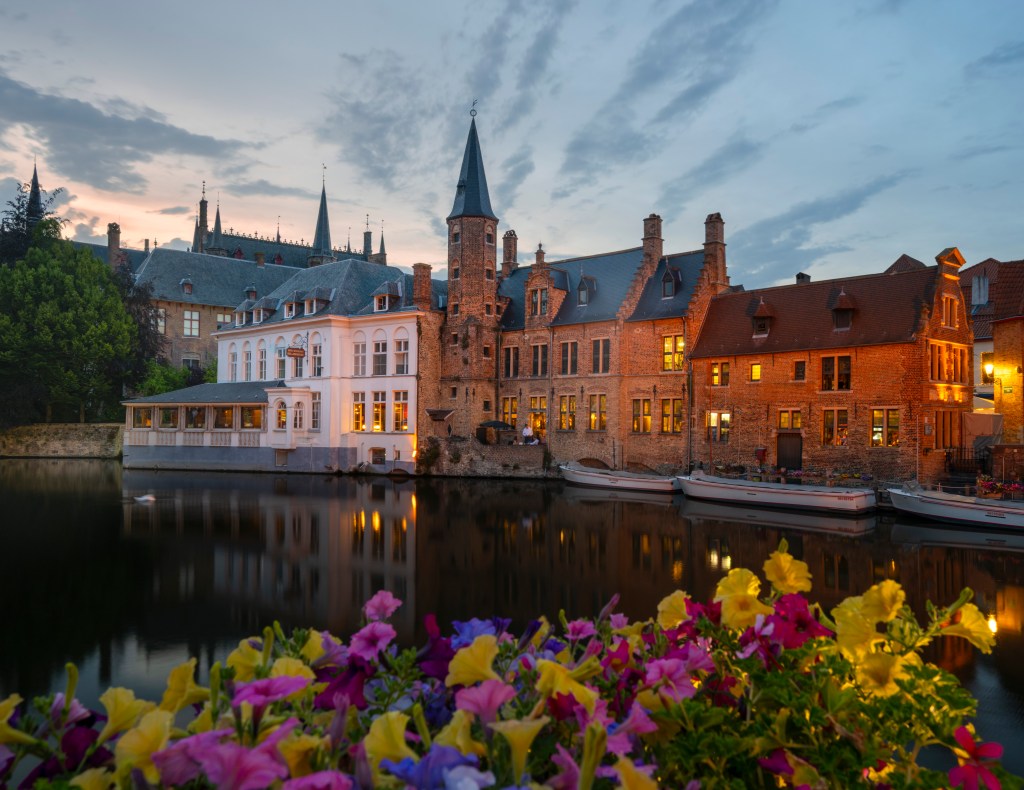
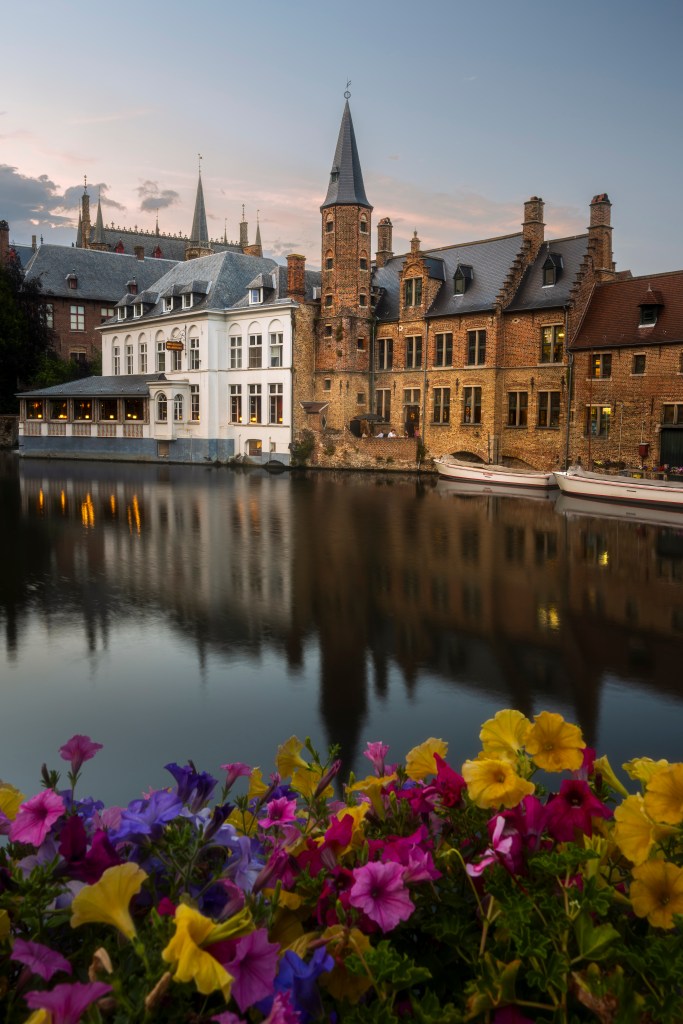
Jan van Eyckplein: Canal Lines and Historic Façades
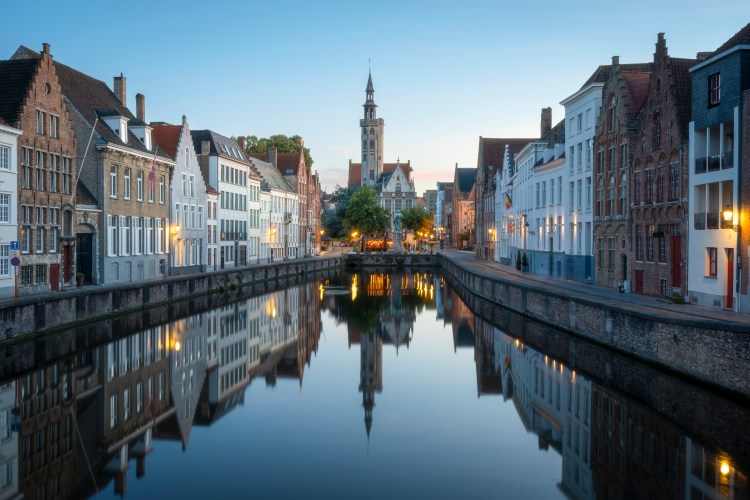
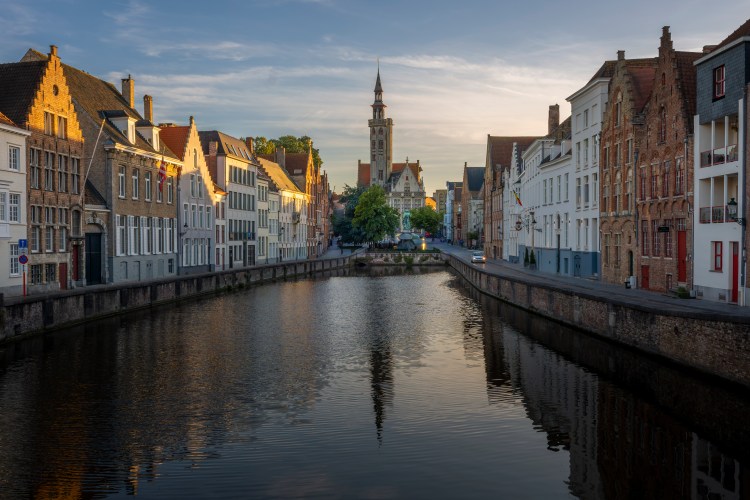
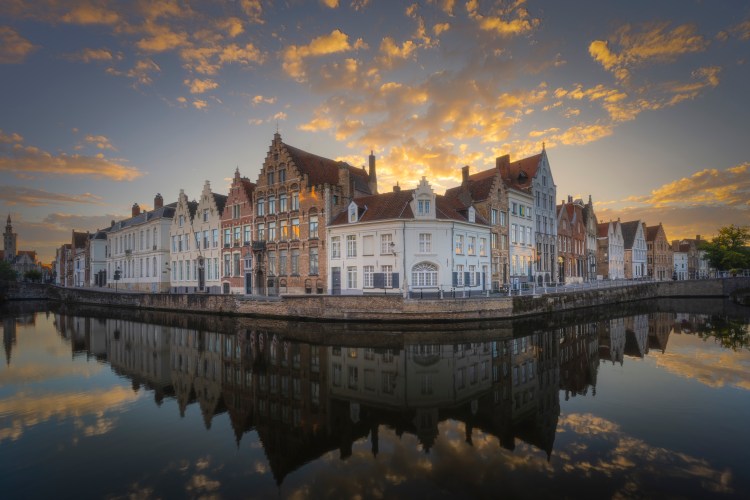
Jan van Eyckplein honours the influential Netherlandish painter and leading figure of the early Northern Renaissance. His statue stands near the terminus of a canal once used for trade, surrounded by the architecture that makes this part of Bruges especially rewarding to photograph.
The surrounding streets contain many strong details and façades, but I concentrated on the canal view from the first crossing bridge. From there, the water becomes a leading line into the square while the buildings create a layered sense of depth.
Want more guides like this? Subscribe for new locations, composition breakdowns, and field-tested gear notes on my future posts. I publish a new post about once a month – subscribe to make sure you don’t miss it.
Beyond the Canals: Market Square and the Windmills
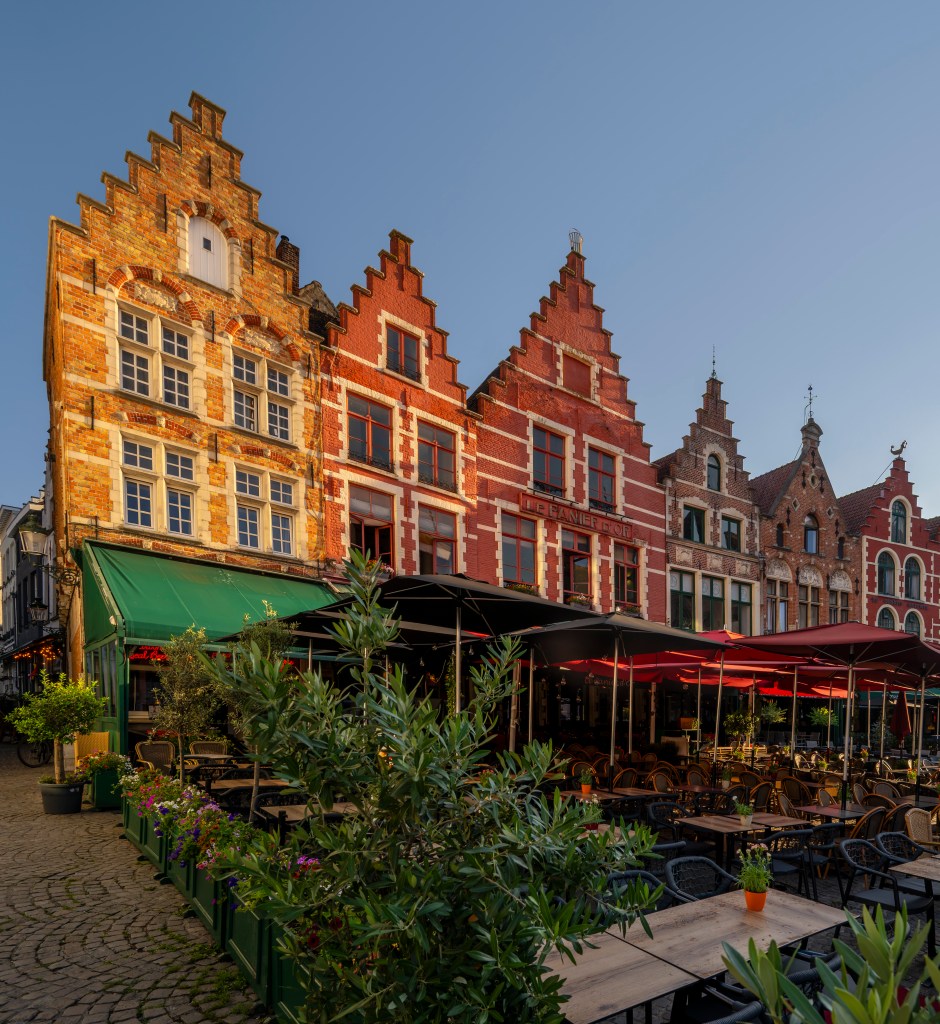
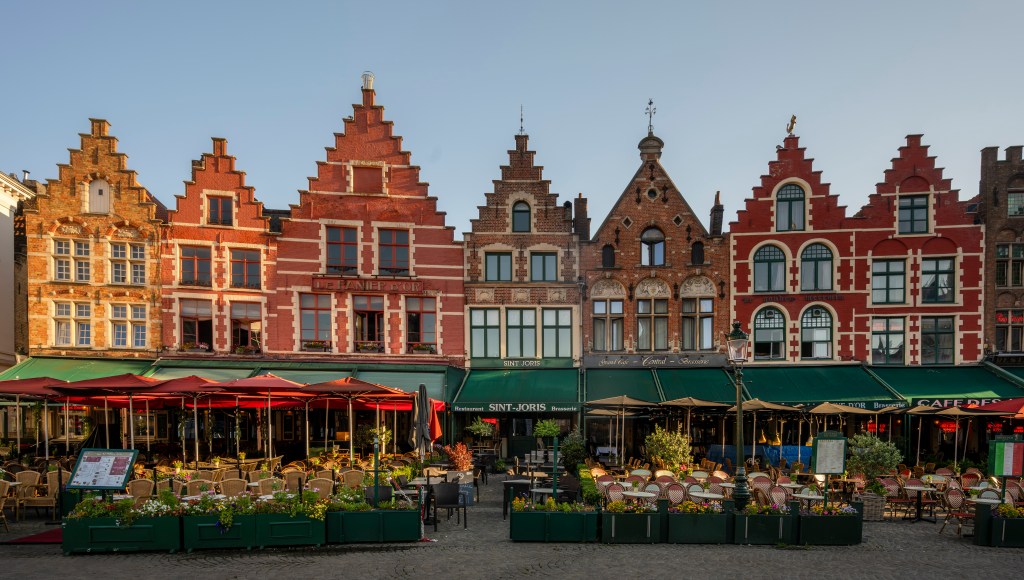
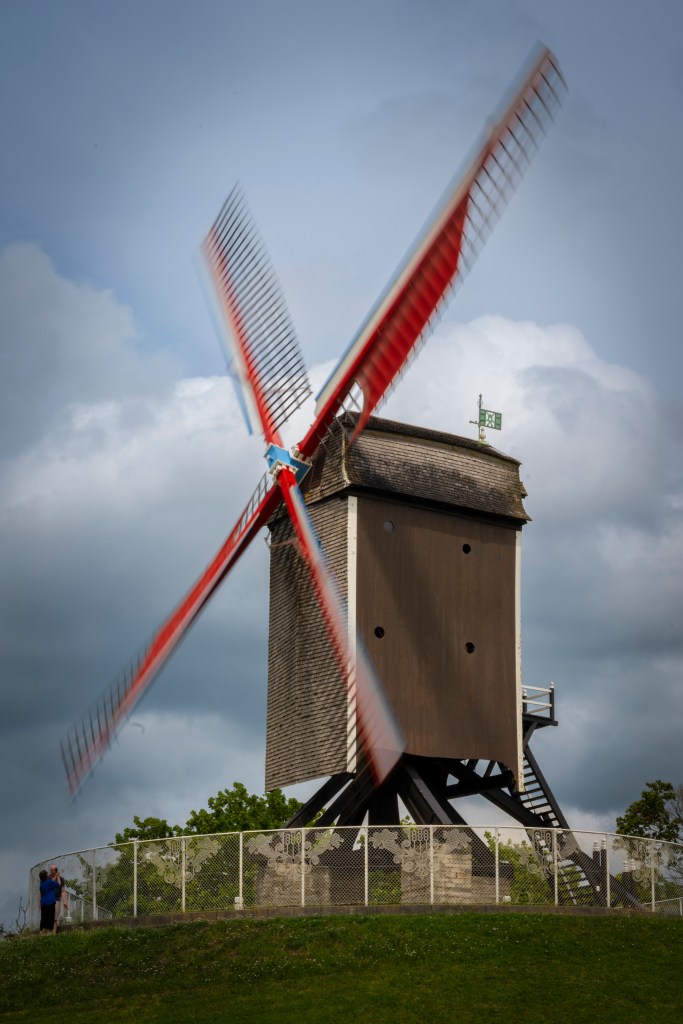
Two additional subjects deserve attention. Market Square is the crossroads of Bruges and a showcase of the city’s architectural character. It is crowded and challenging for clean compositions, although it offers excellent opportunities for street photography. Along the moat, along the border of historic Bruges, the St. Janshuys windmill provides a very different subject. This working flour mill can be explored from the inside, where steep ladders lead past gears and millstones.
Photography Tips for Bruges
Bruges rewards preparation, patience, and repeated visits to the same viewpoint. These practical tips will help you make the most of your time in the city.
- Work the quiet hours: Photograph around sunrise and sunset, when crowds thin and the light becomes more directional. Use the middle of the day to scout angles and predict where the best light will fall.
- Watch the weather: Proximity to the North Sea makes conditions change quickly. Track cloud movement, wind direction, and sunset position before committing to a composition.
- Choose a clear subject: Whether it is a canal, tower, windmill, or façade, identify the visual anchor first and build the rest of the composition around it.
- Pack a focused kit: A wide-angle lens and a moderate telephoto cover most scenes. Bring a tripod for blue-hour and night exposures, and consider a polarizer to control glare and enrich colour around the canals.
Final Thoughts
Every destination leaves me wondering whether I will return—and what I would photograph differently next time. Five days around the summer solstice gave me enough time to scout, revisit compositions, wait through several sunsets, and explore nearby towns. Bruges proved exceptionally rewarding: visually rich, easy to navigate, welcoming, and full of scenes that changed character with the light. I would return with the same strategy—travel light, scout widely, and save the most promising locations for the quiet edges of the day.
Hope you enjoyed this post – if you did, don’t forget to subscribe.
More City Guides
If you are interested in more city guides, check out these posts;
Exploring Stockholm’s Old – Town – Gamla Stan
Beating the Heat in Paris
Or you can check out all of my posts, organized by location on my Travel Guides.
My Gallery
For my favorite photos, check out the ‘Collections’ section of my website.
I have also partnered with Pictorem, a professional printer who can ship prints anywhere in the world. They can print on a variety of media including metal, acrylic, paper and canvas. They offer a money back guarantee if you are not completely satisfied. If you see an image which you like and it is not available on Pictorem, just contact me here.
Here are some of my favorites.

To get notifications of my future posts subscribe here.

